Showing posts with label Pharoah Sanders. Show all posts

Sunday, August 25, 2024

Kamasi Washington - Fearless Movement (Young, 2024)

A return to spirituality in jazz was clearly tangible since Eric Mingus, Charles’ son, released a record titled "Too Many Bullets, Not Enough Souls” (2002 Some Records, re-released in 2021 by Zoar Records). The collaborator of Elliott Sharp (who also produced this album), Hal Willner, Karen Mantler and many others, was clearly pointing out what we were missing at that point in history. 

The duty of a spiritual jazz, or of a spiritual crossover between genres, was taken more recently on the shoulder of musicians such the late great Jaimie Branch and of Kamasi Washington, that few months ago released this interesting LP titled “Fearless Movement” (2024, Young). The album opens with an invocation to God both in English and in an ancient Ethiopian language. But it’s the tone of Washington saxophone that sometimes makes you think of a spiritual musician such as Pharoah Sanders. 

Clearly Kamasi Washington is not a copycat, his style is evidently his own, but there is something in his attempts to launch ‘that’ cry over the obstacles that in a way reminds us of John Coltrane’s pupil, exactly as the beginning of this record can remind us of many Coltrane’s moments on records such as the beginning of Om, or of Kulu Sé Mama. And even if Washington’s eloquence on saxophone is more linear than Sanders’, nonetheless his approach is similar, being a clear spiritual invocation. 

“Lesanu”, the first track on the album, is clearly devoted to the Aethiopian music of Getatchew Mekurya, Mulatu Astatké and similar masters of ethio-jazz. Sometimes featuring horns speaking in tongues, sometimes featuring keyboard passages or tenor solos, the piece is possibly a prayer, an attempt to create a ‘new song’ for God and so it is a manifesto, as if Kamasi Washington were saying is music is ‘new music’, a new mix between jazz, hip hop, soul, and music to dance with, more than an intellectual experience. Anyway, we’ll see. 

In an interview Washington recalled his aunt who was babysitting him and his brother making them dance, and if this is the idea underlying all the album, another recollection from the childhood is the second track “Asha The First”, whose melody was created by Washington’s daughter while experimenting at the piano. The little girl is present also on the cover of the album along with his dad. The song is immersed in a 1970s atmosphere but featuring singing and rapping by Thundercat, Taj and Ras Austin, and a beautiful electric bass solo that is an homage possibly to Stanley Clarke. 

And if “Computer Love” is a cover of the soul combo The Zapp, from their fourth album “The New Zapp IV U”, “The Visionary” is a less common group improvisation just before “Get Lit”, a mid-tempo featuring the soulful voice of George Clinton and that of a younger but incisive D Smoke. “Dream State”, featuring André 3000 on flutes, has this short psychedelic intro before a small alto saxophone solo who introduces the song with a gentle touch. Washington shows us his expressive ductility at alto before the drums start signing the temperature of this song, calm but decidedly syncopated. 

Finally, “Together” and “The Garden Path” close the first LP with an intriguing ballad with BJ The Chicago Kid at the voice and a hymn full of wah-wah guitars, choirs, and horn solos. At this point one might wonder about his own experience as a listener before passing to the second LP, even because the music is full of references to the past decades of the African-American music history, and you can also ask yourself if it all has a value nowadays in this returning. Obviously Kamasi Washington, his octet and entourage are searching for a commercial affirmation but there’s something original in this music or it is only a good summary of the past glories? 

I know it is a strange question nowadays that everything of value has a strong tie with the past, but obviously we want to understand if what we’re listening to is in a way a small step ahead or if it is a mere reproduction of the past. Maybe the second LP can be of help for us? Let’s give it a try. “Interstellar Peace”, with its almost Coltrane-inspired title, is another piano melody with the horns creating a small hymnodic and melancholic choir before some trumpet and saxophone intense solos. 

Then it’s time for “Road To Self (KO)”, with his almost minimalistic keyboards intro before a piano melody surrounded by the horns, while the drums depict a circular rhythm, leaving us with the feeling that this is not a record of solos emerging from a given structure, as in (too?) many jazz records, but an attempt to create a sonic landscape full of different meanings. One can appreciate pieces like this more than the others, as it happens to the writer of this review, but that’s it. 

“Lines in the Sand” is another ballad where you can appreciate both the foreground and the background, the vocal melody and the horns’ countermelody, in a quiet atmosphere, with only one question in mind: what if these pieces were shorter and less complicated by solos? In a way, if I remember well, Albert Ayler’s “New Grass” was an album containing pieces from 3 to 5 minutes, and it worked well even if it was accused to be a commercial album. 

Sometimes longer structures, like pieces of 12 minutes, aren’t paying well if they’re not able to convey tensions and releases in an intriguing way. Being too much redundant is the defect I can find in this music. Things go a little worse with the last “Prologue”, an homage to a beautiful melody by Astor Piazzolla where you can listen to all the weaknesses of the arrangements by Kamasi Washington. 

In this piece you can find that ‘Seventies touch’ as something little bit out of time. This effect is propagating during the listening to all the album. But there is a sincerity in the music of Washington that is something I want to save. So in the end, all we can do is waiting for future releases and hope in a more contemporaneity of arrangements and of inspiration. 

Spirituality is good, and since I’m reading Sun Ra biography by John F. Szwed in these days I can say it’s also something that has precious roots, but it must become a personal quest, otherwise the risk is that of following the leaders’ principles instead of becoming truly yourself. And what can be applied to spirituality, can also be applied to music. Washington is a musician coming from a noble tradition and with a personal touch as an instrumentalist, but he needs to rejuvenate some arrangements and/or become less verbose. 

For the moment this album is something worth listening, as it is also last year output by Jaimie Branch “Fly Or Die Fly Or Die Fly Or Die (Word War)” (International Anthem, 2023), but everyone has to understand that the sound of music defines an era, and we can’t really take back the past in the present times. We have to move forward, defining this era with music for our times. This is unluckily not what happens with this album, and it’s a pity because the source of inspiration is original, and the musicians involved are great. But being contemporaneous, for an artist, is not optional.


Sunday, March 24, 2024

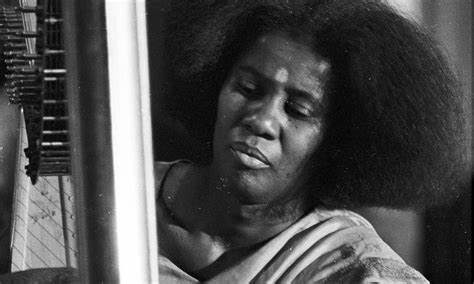
Alice Coltrane – The Carnegie Hall Concert (Impulse!, 2024)

For many people this record will be like a revelation, since Alice Coltrane, due to some not properly achieved steps like the release of Infinity, an album of recordings by the last John Coltrane reimagined through orchestral backgrounds and re-dubbed rhythm section parts that in 1972, the year of the release of the record by Impulse!, was criticized by fans and experts. The risk for Coltrane’s wife and last pianist was to be taken as an inaccurate exploiter of her husband’s legacy.

Nothing more far from the truth. In reality, Alice Coltrane was an accompished musician/composer in her own right. Her first four releases as a leader, from A Monastic Trio (Impulse!, 1967) to Journey in Sathcidananda (Impulse!, 1970) were showing an artist able to play with mastery and sensitivity both harp and piano, and an interesting composer. Those qualities couldn’t be tarnished by a single release, and if you think how much Coltrane loved to experiment with music – he releasaed albums such as John Coltrane and Johnny Hartman (Impulse!, 1963) with a classic jazz singer – that release is at least comprehensible as an attempt to give Trane solos a different context.

More than that, it is difficult to understand why musicians like Archie Shepp, Pharoah Sanders, Jimmy Garrison or Ed Blackwell, just to name a bunch that are available also in this double recording from the Carnegie Hall, should have played with an inferior or non compliant musician, being exposed to criticisms as all the actors of free jazz were in the 1960s. It has been written as an example by Peter Niklas Wilson that not always Albert Ayler was able in the second part of his career to chose the right players for his music, but, even if I’m not of that opinion, for sure it isn’t the case for the people I have mentioned.

Anyway, in 1971, the year of this recording, Alice accomplished a personal and surely passionate path through the loss of her beloved husband due to a liver cancer. This loss was not only serious for the jazz environment, but also painful for all the people around him in particular. A trip to India and the encounter with Swami Satchidananda, the religious teacher who will become Alice Coltrane’s guru, will help her to get out of grief and to focus on what she wanted to achieve as an artist.

No surprise so that in that year Alice Coltrane gave life to a show in honour of and to raise funds for her spiritual guidance. The music, recorded properly for a future record release but unpublished until now, and so fully enjoyable as far as content and as far as form, features two compositions by Alice Coltrane, the title track for the album relased by Impulse! the year before Journey in Satchidananda, and Shiva-Loka, from the same record, plus a couple of famous John Coltrane Compsitions, Africa from 1961 and the most recent Leo from another masterpiece, Interstellar Space (Impulse!, 1967).

The musicians involved in this recordings are Archie Shepp and Pharoah Sanders at tenor and soprano saxophones, flutes and percussions; Jimmy Garrison and Cecil Mc Bee on bass; Clifford Jarvis and Ed Blackwell on drums, and finally Tulsi on tamboura and Kumar Kramer on Harmonium. As said previously the quality of the recording is excellent, but for the two drummers who are not separated in the equalization process, so it is difficult in this case to understand who is playing what as far as their instruments.

Alice Coltrane plays harp on her compositions, and switches to piano for her husband works. Journey in Satchidananda, the opening track, begins with the usual small percussions and bass to create a climate of recollection for the listeners. Finally the bass start to depict the line of the composition and the harp enters with her ascending and descending figures. The waves delineated by the harp give life to something more similar to the sea waves than to a music.

On this texture the voice of Sanders and the flute of Shepp are added at about minute 6, creating a fascinating melody, then finally we are introduced to Sanders first solo on soprano, something that is reminiscent of one of his first records as a soloist like Thembi – similar is the emotional temperature of the piece – until the drums depict a small figure that leaves the sound of the soprano free to paint smaller and gentler melodies.

An arco bass line enters and start a small talk with the soprano, then is the turn of small percussions to take the foreground. Gently we’re arrived almost at the end of the piece, and the waves of the harp and of the saxophone lead us to a spiritual quiet. It’s time for Shiva-Loka, another composition from Alice Coltrane, where the saxophone lines by Sanders and Shepp are decisely more preeminent and articulated even if the mood is still meditative and introspective while the two drums supply a small circular pulse, both more careful about nuances than about pushing.

Disc two opens with John Coltrane’s Africa, a composition I really believe each one of you remembers since present also in last year release of the album Evenings at the Village Gate featuring Eric Dolphy. The melody played by Shepp is obviously the same as John’s original, as faithful is the structure of the composition, but Alice Coltrane goes far beyond McCoy Tyner’s voicings orchestrations on her piano, leaving space to open dissonance and to a music that is more reminiscent of Coltrane mid-60s sound with two drums and horns than of the swinging perfection of his historical quartet of the first part of that decade.

Fire music, as not only for the presence of Shepp, but also for the strenght of the collective effort to be faithful to the original John Coltrane pursuance of unknown lands of expression, with Sanders boiling up until the turmoils that were typical of his collaboration with his late colleague, the music reach another great point where the horns shut up leaving first the piano, then the drums accompanied by the flutes, then again the two basses, free to give life to a sonic landscape made of trembling notes and of a contemplative, final climax at the same time.

Leo, original conceived as a duet between John Coltrane tenor saxophone and Rashied Ali drums, is another piece whose different versions vary as far as the number of musicians involved and consequently as far as arrangement. I have read reviews of this concert in which the reviewers state that this Alice Coltrane is even more in command than in albums like the 1966 live recordings of John Coltrane At The Village Vanguard Again! and Live In Japan, both released by Impulse!, but if a certain progression in mastering her art is surely possible, a comparison between those performances is almost useless.

First of all because the renditions of John Coltrane compositions live were mostly comprised not only by technique and will to experiment but also by the mood of that particular night. As an example, trying to compare the versions of Leo taken from Live in Japan or Interstellar Space and this rendition is impossible, since the differences in personnel and feeling or frame of mind.

One can but notice an increase in the substance of the music itself, such as in reaching a culmination where Leo stands at the opposite of Journey in Satchidananda. The two tenors, the instrument for which John Coltrane is mostly known, are finally free to invoke the true spirit of this music as initially intended by his creator, while at the same time her wife Alice Coltrane is free to run across her keybord as she was doing during the live recording of The Olatunji Concert: The Last Live Recording.

According to the Universal website, this release is only the first step in an initiative held in order to celebrate Alice and John Music through all this year 2024. If this means there will be new music in the near future, we will be only happy to hear such new stuff, hoping, as it happened, that the quality of the recorded sound will improve and increase from the first 2000s releases of live albums until the present times. And we also hope this music will be a good starting point for an younger generation of musicians as an inspiration source.


Wednesday, August 9, 2023

Your favorite critic is too busy with his own woman to mind about the future of the music

I have to admit it: since I write only for passion, without any income – I don’t even host banners on this blog, because I hate when I try myself to read something through my laptop or telephone and all those bright squares appear abruptly – it is easy to write what I want, being also my own publisher. But tonight I want, while I listen to some good music like Oliver Nelson’s The Blues and The Abstract Truth and Pharoah Sanders’ Thembi, to remove some pebbles from my shoe.

Fact is that Italy is a strange place if you want to be a critic. In every musical genre, the mantra is always “you don’t like it, you don’t talk about it”. This way, a critic is not a critic anymore. The market is full of horrorful material and art places are, or better said were, full of horrorful concerts. But let’s start with some order.

First of all: the ego affair. I was attending a concert by pianist Vijay Iyer some years ago. I was part of the press staff, since I was writing reviews for an Italian webzine called Mescalina. That meant I had my own seat. In front of me an old guy, another critic, told litterally everyone in the (deconsacrated) church near him: “Let’s see if tonight I’ll discover a great pianist as I discovered Brad Melhdau many years ago”. I didn’t knew who the guy was. But this is a first problem.

Mr. Iyer was still discovered. Blow Up, an Italian magazine that is our version of The Wire – mine is a conservative country so we always copy everything from foreign countries, artistically speaking – still issued reviews of records and concerts by the New York based pianist and composer. There was no need to re-discover him. What the critic meant was possibly: Iyer need to be brought to the masses. I’ll do it. What the critic unconsciously was saying was: Iyer need to be brough to my ear because if I don’t know something, this something is previously unheard by virtually all those who matter.

And this is the ego affair. There’s no such thing as humility in the music world. Every critic – even me, for what it worths – has his own idiosyncrasies – let’s talk about mine: I can’t stand melodic jazz if played after bebop was born, with notable exceptions by singers like Nina Simone, but as far as pianists they have to beat it or prepare it, at the opposite if you’re a drummer and don’t own little percussions you’re out.

Obviously I listen to every styles of music, but when it comes to jazz it has to be as much distorted. I’m joking about myself, but if you don’t play free jazz in the present time you’re not adventurous enough for me. And this is a limit, because I heard a beautiful Italian singer dedicating a project, an entire CD, to David Sylvian few years ago and I didn’t even write about it because the arrangements were too smooth to me. See what I mean?

Now, let’s get over it. Every critic has his own idiosyncrasies, that was the main point. But every critic – even me? I’m asking myself right now and I don’t have so a proper answer – at least in my own country believes his own tastes are the only tastes that matter. That’s why it would be interesting to have other hands to strum that laptop keyboard for this blog other than me. But I’m a maniac of control as everyone else in this business. I think it as to do with the fear people would write with too much indulgency.

Now, let’s move forward to the second point. In this industry, you have to be controversial to be successful (and be paid). This is often misinterpreted for having your own vision. Let’s make an example. There was a guy, another critic, who now is one of the spearheads of a famous Italian jazz magazine. Before, he had his own blog as me. Being older, possessing a record shop and having more time than me to listen and read is a good difference. Another are his own judgments over my world, that of free jazz and improvised music in general.

Nothing against Coltrane or Ayler, but Dolphy as an example was not completely at ease with composition during his career for this guy – maybe I suggest because Dolphy died at an early age and always had few money in his pockets: why aren’t we talking about all the musicians that left the business to play litterally along the road like Giuseppi Logan or Charles Gayle? And the reason was? The business in itself, not giving enough money to the musicians and leaving the most part of it to the labels and their managers.

But the judgment about Dolphy was motivated in his dissertation about some recent re-releases of Chico Hamilton featuring the multi-instrumentalist, so I have nothing basically against it but that if you are a music critic you also need to be a little bit of an historian and an sociologist. Just a little bit, because you cannot always know everything, but it helps a lot. And what about Peter Brotzmann? This guy wrote in his blog many years ago that the German reedist was a “paper mache figure”, with no further explanation.

The guy also wrote and published a book full of judgement more argued and debated, but this is the tenor, more or less. Interestingly enough we had an email exchange in which I asked him why music and jazz also worldwide was, with notable exceptions, deteriorating. During those years the Turkish scene was exploding, and it was a good thing for the experimental music scene in general, but at the same time I heard in my country people whose attitude was really the one stigmatized by Mingus like, “fuck the school, I’ll play free”.

I was invited in person to attend at concerts where the musicians involved, releasing records also for their own little label, were not even able to LISTEN the one the other and react properly. Same in the world of contemporary music. So, I asked this now famous critic what were his thoughts about it, and he wrote me something like he was too busy with his own woman to think about this topics. I think he was saying I was loosing my time trying to separate the sheep from the goats.

This leads me to the third point: there’s no critic at all. An Italian musician once told to a friend of mine, that as me wanted to write about music: if [name of a famous American saxophonist] plays in a way you don’t like it, you can always write or say that he “played like it was”. This, with the other advice other people gave to me about “you don’t like it, you don’t talk about it”, it’s the end of my (unpaid) job.

It’s the end of the games, the end of the music also. No critic, no aspiration to create interesting, fresh and new music to be defined as such. No new music, welcome to the ego trip occupying the space originally devoted to creativity. I started with the last point, but now the cycle is complete I believe. Now. In Italy there is a horrible situation for music. In the world is the same. The old masters are leaving us, the young ones are interesting, sometimes very interesting – a couple names we discussed also here: Mary Halvorson, Patrick Shiroishi, Lao Dan – but none of them is renewing the palette bringing new colors to the light, at least this is my opinion.

Maybe it is not the right time: politically speaking this decade is worse than the 1980s. Economically and socially our civilization is in pieces. It is not a surprise we have great talents, but no innovators – I’d love to discuss this topic in the future with Anthony Braxton, after rereading some of his books – the real problem is that no one wants to talk about it. I lost an interview many years ago – my entry ticket to the press in my country on paper – because of my attitude, my need to define what’s good to me and what’s not, taking my own risks.

Because, if I look at what’s happening in my country, this is the scenario. On one hand, you have trap music dominating the hit parade, together or aside with Italian pop music. On the other hand, you have virtually nothing. People who are in their 20 years or less are not even interested in rock, alternative or experimental music. People of my generation, the Seventies, think ‘serious music’ is only Pink Floyd or Led Zeppelin – or The Cure, or Depeche Mode – they don’t even know about Idles or Algiers, who are rock bands of the present time.

As far as music played live, it is full of 40/50 years old people playing that kind of rock music for old boring people as them. Young guys are interested mostly in people like Dark Polo Gang and their values: money and success. There is no such a thing as a counterculture in my country anymore. I truly believe this is also your future if you don’t pay attention to it. From where do we want to start, right now? 


Monday, October 25, 2021

John Coltrane “A Love Supreme Live in Seattle” (Impulse!, 2021)

October 2, 1965, a Saturday night. The place is The Penthouse, a club held by Joe Brazil where people like Roland Kirk and Chick Corea played many times. Mr Brazil won’t be very happy of the performance of that night, but not because of the music: the deal is, ‘Trane lovers drink only one beer, then they listen to that demanding music with almost religious concentration. But they’re right. That night, John Coltrane enlarged his historical quartet in order to welcome a bunch of other musicians, so it was worh to listen to them carefully.

It wasn’t the first time for the multireedist, this kind of enlargement of his quartet. Few months before, during the sessions leading to the album The John Coltrane Quartet Plays, he hosted bassist Art Davis, along with Jimmy Garrison, for a mournful version of the classic song Nature Boy. Also, the same year, Coltrane recorded his pivotal album Ascension, released only the following year, where he led his classical quartet plus Art Davis again, trumpeters Freddie Hubbard and Dewey Johnson, altoists Marion Brown and John Tchicai, and tenorists Pharoah Sanders and Archie Shepp.

This period, from 1965 until the end of ‘Trane life in 1967 for a liver cancer, is my favorite in the saxophonist career. Les schizophrenic than the previous years, where Impulse! managers were constantly asking him to produce a hit song like Atlantic’s My Favorite Things, forcing the musician to issue records like Ballads, John Coltrane and Johnny Hartman, and Duke Ellington and John Coltrane, while it was clear listening to his less commercial stuff like Africa/Brass, India and the live versions of My Favorite Things what Coltrane’s real direction was, the 1965/1967 period marks the end of the classic quartet and an attempt to follow more experimental paths. 

Unluckily the extraordinary machine of the classic quartet in the end disbanded. Pianist McCoy Tyner declared more than once how unable to listen to the music he was with the passing of time, due to the volume of the two tenors – Coltrane took Pharoah Sanders as a permanent member of his band, and for a short amount of time tried to set a couple of drummers, putting Rashied Ali and Elvin Jones side by side – the latter also said farewell not knowing exactly how to manage with the uncertainties of ‘Tranes experimentations.

But with Alice Liddle, further also Coltrane’s wife, on piano, and Jimmy Garrison as the only member of the previous group remained as pivotal contrabass, the music went on for that short amount of time leaving some masterpieces like Meditation, the above mentioned Ascension, Kulu Sé Mama and the drums/saxophone duets contained in the beautiful Interstellar Space. 

Anyway, that night, the second occasion we know in which Coltrane played the A Love Supreme suite in its entirety, was for sure a special night. Just to start, Carlos Ward on alto and Pharoah Sanders on tenor and percussions are present in this concert/record, as well as Donald Rafael Garret at a second bass. Ward has been mostly a sidemen for people like Coltrane, Karl Berger, Don Cherry, Abdullah Ibrahim and Cecil Taylor if we refer to jazz, but for the most part of his life the man played also funk.


Donald Rafael Garret has been one of those rare musicians whose career is difficult to put in a box and to label. A collaborator of Muhal Richard Abrahms and his Experimental Band, he played also with Sun Ra, Coltrane – he is present also on the double album Live In Seattle, on Om and on Kulu Sé Mama –  Johnny Griffin and Roland Kirk between the many others. 

This version of A Love Supreme is very far from the original, even if the themes of the four sections are all expressed in their entirety and clearly distinguishable. But the variety of musicians involved and the different intros before every part of the suite make this album one of those products of research you can also be disappointed with, if you’re not that much adventurous. Another characteristic of this record is that the use of small percussions by Sanders and the presence of Ward make this rendition of the suite more keen on the experiments of the AACM, building a bridge between the wave of NY free jazz and the Chicagoan avant garde movement.

Those who are familiar with the Juan-Les-Pins version of the suite – played on July 26, 1965 by his classic quartet – will be not particularly swept up by ‘Trane performances on this Seattle date, since he was careful in order to leave the correct amount of space to his many hosts. Ward solo on Pursuance is possibly the most interesting part of the record since it is completely unheard before and Ward himself is not an overrepresented musician – unluckily – but for sure he has something to say: his solo is flamboyantly obliquous but clear and meaningful in his statement. 

Pharoah Sanders solo on Pursuance is something every Coltrane fan wanted to hear in a clearer recorded environment since the release of the Olatunji Concert in 1999. There, the noise of the poor recording wasn’t helpful in making us concentrate on Sanders honks, squeals, parodistic marches, while here his solo, that for some parts is not that much different from that on My Favorite Things, is finally clearly audible.

And it is an important statement. Apparently, Pharoah is not matching with the rest of the band and seems not consequent to what John previously have played, but if you listen closely it makes completely sense. Hazardous as it is melodically, harmonically and chromatically, Sanders’ solo is one you don’t forget quickly and that in a way change emotionally at every listening, depending on the feeling it moves in you, that can be different every time. 

In his liner notes for the album, Ashley Kahn writes that maybe there can be other live versions of A Love Supreme to discover. We hope so, and we hope they will be different the one from the other, in order to touch with our ears how different even a perfect music can be while involving other human hearts or the same in different occasions. Quick note for the listener: this live version is recorded with the drums and the piano on the foreground and the saxophones and the bass on the background. Disappointing as this can be for some of you, some people say that listening to it in mono, if your stereo gives you this opportunity, is a good correction.  


Tuesday, May 25, 2021

Floating Points, Pharoah Sanders & The London Symphony Orchestra “Promises” (Luaka Bop, 2021)

I started listening to improvised music in 1999. I was a fan of Tom Waits then – I saw him live in that same year in Florence – and I remember that at a certain point I wanted to start listening to jazz music. Back in the days, you were able to go to those enormous music megastores in Milan – Messaggerie Musicali, Fnac – and also a lot of small record shops where you could take your CD, go to a workstation provided with headphones and, thanks to the barcode on the album, listen to it before the purchase.

That’s how I was into Mingus – how can you resist to the “Haitian Fight Song” bassline? – as an example. Then there were newspapers like “Il Manifesto” that, thanks to the long articles on a Saturday insert dedicated to culture, you would read extensive analysis of every music style, from calypso to soundtracks, and run into an article about John Zorn and his filecard compositions, just to give you a help in understanding how I was meeting new music prior to the internet era.

But when I started listening to Coltrane, I was only trusting his name and my curiosity, and so I bought my copy of “A Love Supreme” happy to learn something new. But at the first listenings – that was my first jazz album – something strange happened to me: my head was simply going somewhere else. I was simply not used to improvisation, so my brain was refusing it. But, you know, practice makes perfect. 

So in a few time I was hooked by a lot of more or less traditional jazz, like Davis, Holiday, Rollins, Ellington. I also bought me some books, like “Jazz” by Arrigo Polillo, a classic reading in my native language. And then I started to see my first concerts. The very first one was a Masada quartet featuring Zorn, Dave Douglas, Joey Baron and Greg Cohen. For free. I was really happy. Then, after quite some months, I left Milano and the university for the suburbs and my parents.

But I kept on listening to music. And so it came 2001, the year the Trane’s album “Olatunji Concert” was released. I remember that at first I was happy about this record because, even if poorly recorded and produced, it was really my idea of music put on a CD. Pure sound, sometimes pure noise with fragments and echoes of melodies coming from God knows were. And then it happened something I would call an ‘agnition’. 

I was on a trip with friends, a psychoanalist – not my therapist, at the time I was followed by a younger woman – and other people. We had to join a panel discussion, or something similar. This pal, the therapist, was interested in what I was listening to, so he asked me to put some music into the car stereo. I had some records with me, not by chance, and my choice was the “Olatunji” album. I thought it would be funny, to see the reactions of my friends. But what I didn’t know at that time was MY reaction. Something really unexspected.

While listening to the melody of Coltrane and its development on “Ogunde”, and then the harsh screams of Pharoah Sanders, I felt something inside of me, as if something were collapsing and crumbling. Obviously there was nothing in me really happening, this is only a metaphor for a feeling. But I remember clearly that sensation of something falling apart in me, and I would use, back in those days, to describe this feeling I kept for myself, the German word ‘spaltung’. 

‘Spaltung’ (in English: ‘split’, or ‘slit’) is a word used by Jacques Lacan, the self-promoted renovator of psychoanalisis, to identify the ontological division of the self between a talking being and a thinking being, meaning that you’ll never be able to describe with words your true inner feelings, and this scar is the first trauma of every human being. Since I’m not Slavoj Zizek, I won’t bore you with such concepts moreover, but those were the things that came to my mind in those times.

I never had such emotions again, but I remember that my basic idea was, if I’m able to feel something I’ll never be able to trasmit, and if this is something I have to take care of, something I have to be responsible for, in a way this is, as far as myself, the same as a good improvisor does while he creates his own language and music: something he is responsible for, even if few people understand him. If Arto Lindsay takes his risks in scratching his guitar, why do I have not to be serious about my own life? 

Since 2004 until 2007 there was also a period where I simply could not listen to free jazz and improvised music. Every time I was trying to spin a record by Don Cherry, Peter Brotzmann, or Gato Barbieri, I was having horrible feelings. I had never been aware of another human being with such sensations as me, but in a way I feel now that at that time I wasn’t free as a person, and so I was not able to listen to such a free music.

If you are readers to my blog, now you know that everything is all right. I mean, I can listen to music so carefully that I can write about it. So, it’s just fine. But when I knew that Pharoah Sanders was working to a new album in London, and then when finally I was able to listen to that record a month ago, the one I’m reviewing for you now, I thought back to those events of my life. Obviously I was curious about how such a record would sound, and I was pleasantly surprised in listening to it this spring. 

All things started in 2015. At that era, Pharoah Sanders listened by chance to “Elaenia”, a record made by Sam Shepherd aka Floating Points. Curiously enough, he was also in a car, but with a guy from a record label, and not a psychoanalist, who gave him the hereabove mentioned album. Sanders and Shepherd started meeting each other. Maybe they were going for a visit into the British Museum to see ancient Egypt’s statues. Or maybe they were talking about music together.

Then, the two started thinking about making music together. “Floating Point” is the result of this meeting. It can be described as a symphony in nine movements somewhere between third stream, ambient, minimalism; as if Gunther Schuller met Brian Eno and Steve Reich. Let’s try to analyse the movements of this work, so that we can deal with it closer and describe it more carefully using the most apted words. 

Fist and most important, this record sees harpsichord piano, other electronic instruments and the saxophone on the foreground. “Movement 1” sees Shepherd depicting the few notes that, repeatedly, will constitute the skeleton of the entire composition. After quite a while, it’s Sanders turn to improvise a melody that will give you the feeling of being back in the era where Coltrane was playing with the likes of singer Johnny Hartman: his gentle side’s ghost is now between us.

Strings come near just to underline the ecstatic atmosphere with a series of prolonged statements. They dominate “Movement 2” a little bit more, even if the scene is taken by Sanders and his melancholic melody. Some electronic sounds embellish the music, as it happens in some of Bjork albums throughout “Movement 3”. “Movement 4” begins with Sanders voice, whose purpose is to give life to a more human feeling than electronic sounds, just before another tenor solo. 

Some chimes, or sounds that imitates them, enrich the solo, then some piano and electronic melodies in place of the repetitive pattern we hear from the beginning come to give strenght to Sanders statements. Gentle electric sounds succeed each other on “Movement 5”, while the saxophone try to give life to a music that is reminiscent of all the history of free jazz but thin as a gentle breeze; and then, here we are again with the harpsicord pattern.

“Movement 6” is murmured through tenor, clavier and a cello solo. What’s peculiar in this music is that you don’t have a simple add of instruments, the one on the other. Every note is brushed with the right space to separate it from the others. Then the orchestra underlines the cello’s melody gaining the foreground. The impression anyway is not that of an alternating of full, rounded sounds and more sparse notes, a well known dynamic in jazz music, but that of different feelings cohexisting together in the heart of the listener. 

Crescendo of last part of the movement leaves space to a new repetition of the now well known hapsichord notes at the beginning of “Movement 7”, even if soon we hear a new melody on saxophone. Now silence is almost more important than music, or, better said, it is from silence that the music can take his life. The entire orchestra also is aware of this, and so it’s more cautious in participating to this creation.

More harpsichord little figures go around Sanders’ tenor, taking soon his place in conducing the music. An ecstatic melancholy is, anyway, the predominant feeling of this part of the symphony. We hear a more decise turn on minimalism. More and more rapid figures intertwines, until a new saxophone assertion, more decise than the previous ones. Even the coexisting of analogic and electronic sounds isn’t creating a contrast, also thanks to the equipment Mr Shepherd chose for the recording. 

Piano, Harpsichord, Celesta, Fender Rhodes, Hammond B3, Oberheim 4 voice & OB-Xa, Solina String Ensemble, Therevox ET-4.3, EMS Synthi, ARP 2600 and Buchla 200e are the instruments that are mixed together with the saxophone and the orchestra. “Movement 8” seems to come from a session of 1970s rock music, even if the notes we learned to appreciate are constantly present, at least until new electronic sounds appear jumping into a silence every now and then, leaving you with the feeling of constantly reemerging from a dream.

Finally, a subtle organ drone drive us until “Movement 9”, where, after some silence, we can appreciate the orchestra’s dramatic but atonal crescendo until the end. An album for people who want to undestand how much the shifting from one feeling to the other or the compresence of different feelings can be a form of spiritual awakening – because art is always a form of spiritual awakening – “Promises” is exactly as its title wants to suggest. 

For those of you who are not completely aware of the history of avant garde jazz, Farrel “Pharoah” Sanders – his nickname is the gift of another big soul, the mythological Sun Ra who hosted him in his Arkestra at the beginning of his career – is one of the very first musicians to experiment with free form and the decise insertion of noise elements taken from R&B into his sound and vision, as many other did at that time, from John Coltrane to Albert Ayler.

Recluted by Coltrane himself in his second small group after the one with McCoy Tyner and Elvin Jones disbanded, and even prior in seminal records like “Ascension” and “Meditations”, Sanders stayed with Trane until his death in 1967, following then his path with new, different ensembles, and experimenting with different types of music. This album is a way to reconcile past and present, since Sanders style evokes that of his soul brother and maybe, given Coltrane’s curiosity for every music style, it is not far from the truth to think that if he would have lived longer, maybe he would have experimente with such sounds. 


Friday, February 18, 2011

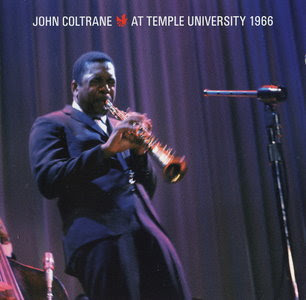
John Coltrane - At Temple University 1966 (FreeFactory, 2010)

This is probably the best recorded late Coltrane performance ever issued. Not as subversively noisy and harshly unconventional even for Trane standards of that time, as his Olatunji Concert (officially published in 2000 by Impulse!), this 1966 live exhibition of his last quartet gifts fans all over the world with one of the most beautiful renditions of  both Naima and Leo. Naima is here more organic than on Live at the Village Vanguard Again!, where piano and horns were less focused into a continuum; Leo (the studio version, a sax/drums duet, was published as a bonus on Interstellar Space cd reissue) presents Jimmy Garrison bass and Alice Coltrane piano on the very background, due to powerful argumenting of two saxophones and drums. Arcoed bass gives this rendition an ineffable sense of melancholy, but it's up to Crescent, a beautiful 1964 composition from the same titled record, to testify the state of Trane's mastery and even difficulties in developing further his style and language.

As Ravi Shankar states, in his liner notes, John Coltrane was looking (as ever) for something different. Indian sitar master points out at inner peace, at the pain of living he felt in crossing many jazz music of that time (and after all, Trane himself was looking for yoga meditation and Shri Ramakrishna teachings and relating his music to his inner struggling); but as far as this music from Temple University, what we hear it's a continuous, firm fire coming out of an injure that has already found a forged shape of expression. A record to listen to carefully, relating to the way Trane tries to cope with his musical architecture, always expanding it, whereas Pharoah Sanders gives shape to multiphonics and screaming lines that are as assertive as full of awareness. Alice Coltrane plays piano as harp, interlacing beautiful textures with Rashied Ali's wide open palette of percussions.

Personnel: John Coltrane (tenor sax), Pharoah Sanders (tenor sax), Alice Coltrane (piano), Jimmy Garrison (bass), Rashied Ali (drums)

Tracks: Naima (16.47) - Crescent (26:15) - Leo (20.43)