There are albums or pieces of music that must arrive at the right time to touch your heart. That's why, even though I've known about this music for a couple of months, I decided to write about it only today. "Why" is a short but compelling title. It challenges listeners to think beyond conventional boundaries, immersing them in the flux of past and present while transcending societal norms. In essence, it embodies what every piece of improvised music should aspire to achieve.
Joel Futterman, like William Parker, is a veteran of free jazz. Born in Chicago in 1946, Futterman was influenced by Clarence Eugene Shaw, a trumpeter and student of Gurdjieff's Fourth Way. Musically, Futterman was a devoted student of Coltrane, Dolphy, and Monk. One striking aspect of his style is that, while sounding contemporary, his melodic approach—even when pointillistic and abstract—sets him apart from Cecil Taylor and other contemporary piano masters.
It has often been said that Taylor played the piano as if it were a drum set. Futterman, however, plays the piano as if all these techniques, borrowed from Monk, Cage, and others, were honed to fit his own unique vision. After playing in Chicago from 1964 to 1969, the pianist moved to Virginia Beach in 1972. His first album as a leader was released in 1979, and his many collaborators have included Jimmy Lyons and Richard Davis.
Following a period of musical inactivity, Futterman returned to collaborate with various artists, including Kidd Jordan and Alvin Fielder. It's not surprising to see him playing in this set with William Parker, who, after a period of playing with musicians of his own generation in the supergroup The Commitment, began collaborating with veterans like Cecil Taylor and Peter Brötzmann. Listening to the "Why" album, it's clear that Futterman and Parker fit together remarkably well.
I've mentioned pointillism, and indeed, Futterman's style of attacking with short phrases and notes, their effect prolonged through subsequent phrases, matches perfectly with Parker's bass playing, both plucked and bowed. There are moments when their interplay is almost telepathic (as it should always be in this music), and you can sense that the two are playing after dismissing all rational thoughts and practices, relying instead on intuition and more emotional skills.
I'm not sure how familiar you are with Gurdjieff and his 'Fourth Way.' One of his most important statements is that we tend to love as we count, using our rational mind. However, he proposes a new way—the fourth—in which we can learn to be different, more complete human beings. In this sense, love, like art, is both a territory in which to enjoy this new self and a doorway to it.
Even the most skeptical listeners can appreciate this music and be captivated by the beauty and density of this dialogue. While Parker, playing with Taylor and English drummer Tony Oxley in the so-called "Feel Trio," was accustomed to playing independently from the other musicians, here the 'interdependence' between the two musicians is clearly enjoyable.
I've recently listened to many free improvisation albums that have both highlights and lowlights, but this album consists entirely of 'highs.' Therefore, I wholeheartedly advise listeners to experience and enjoy it in its entirety. "Why" is not just an album; it's a journey into the depths of musical intuition and emotional resonance.
Candid Records was a notorious label founded in 1960 that, in more than six months of existence, released about 30 records. And what records: between them, the here reviewed Charles Mingus Presents Charles Mingus, the other masterpiece We Insist! Freedom Now Suite by Max Roach, albums by Steve Lacy, Cecil Taylor, Eric Dolphy, records of blues and more.
After planning some reissues last year, this Incarnations was published last November 2023 for Record Store Day, but then it was re-released both on CD (for the first time) and vinyl this year 2024. The album consists of 5 compositions recorded in October 20 and November 11, 1960, at Nola Penthouse Studios in New York, and they feature musicians such as Eric Dolphy on alto saxophone and bass clarinet, Paul Bley on piano, Dannie Richmond and Jo Jones on drums between the others.
Far from the violent expressionism of the sessions we were accustomed thanks to the still mentioned Presents album, the music here collected is mostly gentler and sweeter, even if more excited moments are also present. One of the reasons of interest of this album is the presence in these sessions of such diverse musicians as the avant-gardist Dolphy and Roy Eldridge, who was tied directly to the swing era.
But let’s start from the beginning. The Lp presents as first Mingus’ composition Bugs, an 8 minutes tour the force with solos by Charles McPherson on alto, Booker Ervin on tenor and Lonnie Hillyer on trumpet. Paul Bley here is more than a mere accompanist, and his solo take place after Mcpherson’s filling the room with both his hands and creating a nice contrast between lower and upper registries before Ervin statement.
Differently from Hillyer’s, Roy Eldridge’s trumpet on R&R, one of his own compositions, is muted. Subtly nuanced and accompanied through the melody exposition by Dolphy’s alto, his solo is sometimes scratchy and mostly anchored to the jazz tradition. It seems appropriate choice for Mingus to introduce trombonist Jimmy Knepper after Dolphy’s solo, just to widen the colors of this execution.
Dolphy here is coherent with what the music requires, since his raucous and oblique style is way more consistent with the ‘old’ style, a lesson that the devotees of tradition are in need of relearning, instead of polishing and refining something that was full of ironic statements and near the colloquial eloquence of the old blues/swing era.
Mingus finally can also cut out for himself the right space for a solo introducing again Eldridge, finally free to express himself without the damper: it is his turn to show how modern his solutions can be. Dolphy and Knepper agree with few statements before an enthusiastic ‘tutti’.
All The Things You Are (All) opens with a unison between the arcoed bass and Knepper and Woodman trombones, before leaving space to an ensemble work that was typical of the 1950s Mingus’ works. Interestingly enough, Mingus introduces the track with a speech in which he explain to have added the ‘All’ to the title in order to get the royalties he deserves as arranger of the composition.
Reincarnation of a Lovebird (2nd Version) is opened by a piano intro by Paul Bley embellished by Dannie Richmond snare drums. Differently from the most famous version o the album The Clown (Atlantic, 1960) here we have a more expressionistic rendition, with the slow section more stretched and a swinging section more thrilling.
The album closes with a Body and Soul that is structured as the previous piece, with Dolphy soloing on alto followed by Jimmy Knepper and Britt Woodman on trombones, Bley on piano, Ted Curson and Hillyer on trumpets. With All The Things You Are as the only true unreleased composition, this album is nonetheless an important document of how the music of Mingus was multi-faceted, with one ear rooted in the tradition and the other pushed into the future.
For those who want more, I know there is a boxset somewhere, released in 1989 on Mosaic, featuring all the bassist releases for Candid Records. Mingus’ music won’t cease to give surprises to those who will come close to it. Musicians like Dolphy, Richmond, Bley, Curson, and all the bass player’s cohort will amaze you with their inventiveness and musical mastery.
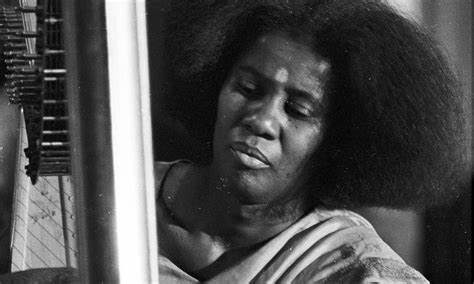
For many people this record will be like a
revelation, since Alice Coltrane, due to some not properly achieved steps like
the release of Infinity, an album of recordings by the last John Coltrane reimagined
through orchestral backgrounds and re-dubbed rhythm section parts that in 1972,
the year of the release of the record by Impulse!, was criticized by fans and
experts. The risk for Coltrane’s wife and last pianist was to be taken as an
inaccurate exploiter of her husband’s legacy.
Nothing more far from the truth. In reality,
Alice Coltrane was an accompished musician/composer in her own right. Her first
four releases as a leader, from A Monastic Trio (Impulse!, 1967) to Journey in
Sathcidananda (Impulse!, 1970) were showing an artist able to play with mastery
and sensitivity both harp and piano, and an interesting composer. Those
qualities couldn’t be tarnished by a single release, and if you think how much
Coltrane loved to experiment with music – he releasaed albums such as John
Coltrane and Johnny Hartman (Impulse!, 1963) with a classic jazz singer – that
release is at least comprehensible as an attempt to give Trane solos a
different context.
More than that, it is difficult to understand
why musicians like Archie Shepp, Pharoah Sanders, Jimmy Garrison or Ed
Blackwell, just to name a bunch that are available also in this double
recording from the Carnegie Hall, should have played with an inferior or non
compliant musician, being exposed to criticisms as all the actors of free jazz
were in the 1960s. It has been written as an example by Peter Niklas Wilson
that not always Albert Ayler was able in the second part of his career to chose
the right players for his music, but, even if I’m not of that opinion, for sure
it isn’t the case for the people I have mentioned.
Anyway, in 1971, the year of this recording,
Alice accomplished a personal and surely passionate path through the loss of
her beloved husband due to a liver cancer. This loss was not only serious for
the jazz environment, but also painful for all the people around him in
particular. A trip to India and the encounter with Swami Satchidananda, the
religious teacher who will become Alice Coltrane’s guru, will help her to get
out of grief and to focus on what she wanted to achieve as an artist.
No surprise so that in that year Alice Coltrane
gave life to a show in honour of and to raise funds for her spiritual guidance.
The music, recorded properly for a future record release but unpublished until
now, and so fully enjoyable as far as content and as far as form, features two
compositions by Alice Coltrane, the title track for the album relased by
Impulse! the year before Journey in Satchidananda, and Shiva-Loka, from the
same record, plus a couple of famous John Coltrane Compsitions, Africa from
1961 and the most recent Leo from another masterpiece, Interstellar Space
(Impulse!, 1967).
The musicians involved in this recordings are
Archie Shepp and Pharoah Sanders at tenor and soprano saxophones, flutes and
percussions; Jimmy Garrison and Cecil Mc Bee on bass; Clifford Jarvis and Ed
Blackwell on drums, and finally Tulsi on tamboura and Kumar Kramer on
Harmonium. As said previously the quality of the recording is excellent, but
for the two drummers who are not separated in the equalization process, so it
is difficult in this case to understand who is playing what as far as their
instruments.
Alice Coltrane plays harp on her compositions,
and switches to piano for her husband works. Journey in Satchidananda, the
opening track, begins with the usual small percussions and bass to create a
climate of recollection for the listeners. Finally the bass start to depict the
line of the composition and the harp enters with her ascending and descending
figures. The waves delineated by the harp give life to something more similar
to the sea waves than to a music.
On this texture the voice of Sanders and the
flute of Shepp are added at about minute 6, creating a fascinating melody, then
finally we are introduced to Sanders first solo on soprano, something that is
reminiscent of one of his first records as a soloist like Thembi – similar is
the emotional temperature of the piece – until the drums depict a small figure
that leaves the sound of the soprano free to paint smaller and gentler
melodies.
An arco bass line enters and start a small talk
with the soprano, then is the turn of small percussions to take the foreground.
Gently we’re arrived almost at the end of the piece, and the waves of the harp
and of the saxophone lead us to a spiritual quiet. It’s time for Shiva-Loka,
another composition from Alice Coltrane, where the saxophone lines by Sanders
and Shepp are decisely more preeminent and articulated even if the mood is
still meditative and introspective while the two drums supply a small circular
pulse, both more careful about nuances than about pushing.
Disc two opens with John Coltrane’s Africa, a
composition I really believe each one of you remembers since present also in
last year release of the album Evenings
at the Village Gate featuring Eric Dolphy. The melody played by Shepp is
obviously the same as John’s original, as faithful is the structure of the
composition, but Alice Coltrane goes far beyond McCoy Tyner’s voicings
orchestrations on her piano, leaving space to open dissonance and to a music
that is more reminiscent of Coltrane mid-60s sound with two drums and horns
than of the swinging perfection of his historical quartet of the first part of
that decade.
Fire music, as not only for the presence of
Shepp, but also for the strenght of the collective effort to be faithful to the
original John Coltrane pursuance of unknown lands of expression, with Sanders
boiling up until the turmoils that were typical of his collaboration with his
late colleague, the music reach another great point where the horns shut up
leaving first the piano, then the drums accompanied by the flutes, then again
the two basses, free to give life to a sonic landscape made of trembling notes
and of a contemplative, final climax at the same time.
Leo, original conceived as a duet between John
Coltrane tenor saxophone and Rashied Ali drums, is another piece whose different
versions vary as far as the number of musicians involved and consequently as
far as arrangement. I have read reviews of this concert in which the reviewers
state that this Alice Coltrane is even more in command than in albums like the
1966 live recordings of John Coltrane At The Village Vanguard Again! and Live
In Japan, both released by Impulse!, but if a certain progression in mastering
her art is surely possible, a comparison between those performances is almost useless.
First of all because the renditions of John
Coltrane compositions live were mostly comprised not only by technique and will
to experiment but also by the mood of that particular night. As an example,
trying to compare the versions of Leo taken from Live in Japan or Interstellar
Space and this rendition is impossible, since the differences in personnel and
feeling or frame of mind.
One can but notice an increase in the substance
of the music itself, such as in reaching a culmination where Leo stands at the
opposite of Journey in Satchidananda. The two tenors, the instrument for which
John Coltrane is mostly known, are finally free to invoke the true spirit of
this music as initially intended by his creator, while at the same time her
wife Alice Coltrane is free to run across her keybord as she was doing during
the live recording of The Olatunji Concert: The Last Live Recording.
According to the Universal website, this
release is only the first step in an initiative held in order to celebrate Alice
and John Music through all this year 2024. If this means there will be new
music in the near future, we will be only happy to hear such new stuff, hoping,
as it happened, that the quality of the recorded sound will improve and
increase from the first 2000s releases of live albums until the present times.
And we also hope this music will be a good starting point for an younger
generation of musicians as an inspiration source.
On March 9, 2024, the date of birth
of Ornette Coleman, WKCR will broadcast all day for 24 hours (12.00 A.M. –
11.59 P.M.) the incredible music of the alto saxophonist, violinist, trumpeter,
composer and music theorist. Born in Forth Worth, Texas, in 1930, Ornette
Coleman revolutionized jazz starting from a cubist vision of bebop up to
harmolodics, his innovative music theory in which sounds are no more linked to a
tonal centre but free to develop themselves and progress according to the taste, culture and sensitivity of
the musicians.
Since the very beginning of his
career, despite the singability of the compositions included into his first
album Something Else!!!! (Contemporary, 1958), Coleman performances were
perceived as shocking by the jazz community, provoking event violent reactions
of rejection in other musicians. Drummer Max Roach as an example stated that
Ornette Coleman was ruining jazz, even if he played, later on, with musicians
associated with the free jazz revolution such as Cecil Taylor.
But Coleman, who played for his
entire career a plastic alto saxophone because of its microtones even if it was
more difficult to play than one made of brass, and his collaborators Don
Cherry, Scott La Faro, Charlie Haden, Ed Blackwell and Billy Higgins, were
convinced about the righteousness of their music vision, and decided to go on.
It was with Free Jazz: A Collective Improvisation (Atlantic, 1961) that the
shock widened thanks to the use of a double quartet, one led by Coleman and the
other by Eric Dolphy.
Coleman career and discography are
full of such moments of redefinition of a musical genre such as jazz. From the
percussions of the Master Musicians of Jajouka in Dancing in Your Head
(Horizon, 1977), to the orchestrations of Skies of America (Columbia, 1972)
featuring a long composition played by the London Symphony Orchestra, from Song
X (Geffen, 1096) realized with the help of Pat Metheny to the experimentations
on behalf of Yoko Ono, Lou Reed and The Grateful Dead, the music of Ornette
Coleman is under the sign of experimentation and adventure.
Those willing to celebrate, next
Saturday, the anniversary of Coleman birthday, would certainly connect to WKCR in order to enjoy a full day of
incredible music.
Since the end of the 1990s, with music lovers
becoming more open minded like they were possibly in the 1960s and the
following decade, Coltrane was again a pivotal figure for all the rock and alt
rock aficionados who wanted to become aware of other styles of music, as jazz
for example. That’s why there was a huge amount of new releases, mostly live
albums.
Many of them were exceptional as far as
material but poor in terms of recordings, like as an example the live at the
Olatunji Center For African Culture (Impulse!, 2000) with Trane’s last quintet
featuring Pharoah Sanders and Alice Coltrane. But others were incredibly good:
take for instance the double album Live at The Half Note (Impulse!, 2005), with
recordings from a radio broadcast of Coltrane’s classic quartet, or again the
recording of the entire A Love Supreme suite included in the deluxe edition of
the album (Impulse!, 2002) from a Juan-Les-Pins festival, or the recordings
with Thelonius Monk (Blue Note, 2005).
All of this material helped people to keep the
flame of Coltrane’s music alive and well. In these last years new original
material has seen the light of day. The two entire studio records, Both
Directions at Once, issued in 2018 and featuring material recorded in 1963,
the other studio album Blue World, issued in 2019 but recorded in 1964 and with
material dedicated to a soundtrack for a movie titled Le Chat Dans Le Sac by
Gilles Groulx, and finally another live version of A
Love Supreme recorded at a Seattle’s jazz club in 1965 and issued in 2021.
Now’s the time for this Evening At The Village
Gate, recorded live with a single microphone in 1961 just a few times after the
recording of Olé Coltrane, featuring the same personnel: Coltrane aside, there
are the unforgotten genius of Eric Dolphy, the rhythm section offered by Elvin
Jones and Reggie Workman, and McCoy Tyner’s piano. The album, even if in mono,
is extraordinary and exquisite as far as the music comprised herein, end it
will be possibly one of the albums of the year 2023.
Recorded originally by Rich Alderson the
afternoon of a lazy August day only in order to understand if the acoustic of
the club was enough good for the night shows, the tapes were lost for many
years and finally recovered for the New York Library for Performing Arts. Last
July, they were released by Impulse! as a single CD or a double vynil, and are
finally available for all of you passionate listeners.
The first track in an incomplete, but beautiful
in its almost 16 minutes lenght, My Favorite Things, one of Coltrane most
successful compositions reworked and reimagined over and over throughout his
entire career where Dolphy and its flute dominate for the first 7 minutes,
thanks to an angular and graspy voice exploring both the severe and sharp tones
of the instrument, over the propelling circular drums by Elvin Jones, Reggie
Workman’s walking bass and McCoy Tyner’s voicings.
When it’s time for Trane to take place, he
exploits his typical churning tone at soprano saxophone, that set of techniques
that will inspire people like Evan Parker in the following decades. Overacute
tones, almost binaural sounds, hints to the melody of the song interspersed
with raucous and furious yells, all the arsenal that made some critic write the
word ‘anti-jazz’ – we’ll see. But Trane is more than that: from the minute 11
he is able to embellish the melody of the song in a logical and consequential
way, again abrasive but far from being an anarchist’s shout.
When Lighs Are Low is another classic tune
shaped originally by Benny Carter and Spencer Williams in 1936 and that was
subsequently interpreted by the likes of Chet Baker and Miles Davis. This
version, again, start with a beautiful, almost cubist solo by Dolphy at bass
clarinet, an instrument played in his high register this way only by Dolphy
itself and few others trying to imitate him.
Those of you who are familiar with Dolphy’s
language through Mingus’ live records will be happy to hear such a soloing in
this version of a song played by the Coltrane quartet, since many critics in
the past, starting from the studio albums in which the two were collaborating,
asserted that Trane and Dolphy collaboration was sometimes harsh and difficult
for both, since the melodic and harmonic idea of music by Coltrane was not
completely malleable for a musician with the harmonic conceptions of Dolphy.
In this piece, instead, we can hear Dolphy
playing at ease and at will for more than seven minutes, before leaving space
to his pal and his soprano until minute 10, where the soloing is left to a
bluesy and dense McCoy Tyner until the end of the song before a brief assertion
by Dolphy again. The following Impressions is almost classical in its
proceeding and sees Dolphy as a perfect partner for Coltrane, whose solo is
developing lavishly and more consistent, which is so difficult to obtain at the
same time, than the studio version.
Dolphy, again at the bass clarinet, shows us
that idea of angularity typical of his concept of harmonic leap, even larger
than that of Charlie Parker, that made him become famous and peculiar as a
musician. The more than 16 minutes for Greensleeves open a song that, far from
the original timing on the Africa/Brass album with the Dolphy/Tyner
orchestrations, shows us, here, all its potential. Melodic as many of Trane’s
material of choice, it becomes a true tour de force for all the musicians
involved.
Finally, the most intriguing live execution of
the record: Africa, a piece recorded originally for the album Africa/Brass with
orchestrations by Eric Dolphy following McCoy Tyner’s piano voicings, with the
two horns proceeding at the same time is that manner that was defined ‘speaking
in tongues’ by the fans and critics following Albert Ayler and his brother Don
in the same years, that means that every horn is proceeding speaking his own
thing before taking time for a solo.
The more than 20 minutes of the composition are
possibly some of those Steve Reich was referring to during the years as an
inspiration for his works as a minimalist, and so they are an important
document for all the people who want to understand better the many links
between different styles of music such as jazz and contemporary classical.
Far from being a mere exhibition for the two
horns, Africa features a beautiful exchange between Reggie Workman and Art
Davis on bass: the first exploring the rhythm, the other expressing a pedal
that is reminiscent of ancient African music. Those were, in effect, the days
when Coltrane was exploring the music of India and Africa from a composer’s
point of view, establishing also a significant friendship with musicians such
as Ravi Shankar – Ravi will also be the name of one of Coltrane’s sons.
Few months later, John Tynan in Downbeat
will review Coltrane and Dolphy’s music coining the label of ‘anti-jazz’.
Coltrane and Dolphy will stick up for their music from the columns of the
magazine in an interesting article available online and titled John Coltrane
and Eric Dolphy Answer to Jazz Critics. An advised reading for you all,
since if now we can taken Trane and Dolphy music for art, the path to that
consciousness was not linear and it deserves to be deepened in full.
I have to admit it: since I write only for
passion, without any income – I don’t even host banners on this blog, because I
hate when I try myself to read something through my laptop or telephone and all
those bright squares appear abruptly – it is easy to write what I want, being
also my own publisher. But tonight I want, while I listen to some good music
like Oliver Nelson’s The Blues and The Abstract Truth and Pharoah Sanders’
Thembi, to remove some pebbles from my shoe.
Fact is that Italy is a strange place if you
want to be a critic. In every musical genre, the mantra is always “you don’t
like it, you don’t talk about it”. This way, a critic is not a critic anymore.
The market is full of horrorful material and art places are, or better said were, full of horrorful
concerts. But let’s start with some order.
First of all: the ego affair. I was attending a
concert by pianist Vijay Iyer some years ago. I was part of the press staff,
since I was writing reviews for an Italian webzine called Mescalina.
That meant I had my own seat. In front of me an old guy, another critic, told
litterally everyone in the (deconsacrated) church near him: “Let’s see if
tonight I’ll discover a great pianist as I discovered Brad Melhdau many years
ago”. I didn’t knew who the guy was. But this is a first problem.
Mr. Iyer was still discovered. Blow Up, an Italian magazine that is
our version of The Wire – mine is
a conservative country so we always copy everything from foreign countries,
artistically speaking – still issued reviews of records and concerts by the New
York based pianist and composer. There was no need to re-discover him. What the
critic meant was possibly: Iyer need to be brought to the masses. I’ll do it.
What the critic unconsciously was saying was: Iyer need to be brough to my ear
because if I don’t know something, this something is previously unheard by
virtually all those who matter.
And this is the ego affair. There’s no such
thing as humility in the music world. Every critic – even me, for what it
worths – has his own idiosyncrasies – let’s talk about mine: I can’t stand
melodic jazz if played after bebop was born, with notable exceptions by singers
like Nina Simone, but as far as pianists they have to beat it or prepare it, at
the opposite if you’re a drummer and don’t own little percussions you’re out.
Obviously I listen to every styles of music, but
when it comes to jazz it has to be as much distorted. I’m joking about myself,
but if you don’t play free jazz in the present time you’re not adventurous
enough for me. And this is a limit, because I heard a beautiful Italian singer
dedicating a project, an entire CD, to David Sylvian few years ago and I didn’t
even write about it because the arrangements were too smooth to me. See what I
mean?
Now, let’s get over it. Every critic has his
own idiosyncrasies, that was the main point. But every critic – even me? I’m
asking myself right now and I don’t have so a proper answer – at least in my
own country believes his own tastes are the only tastes that matter. That’s why
it would be interesting to have other hands to strum that laptop keyboard for
this blog other than me. But I’m a maniac of control as everyone else in this
business. I think it as to do with the fear people would write with too much
indulgency.
Now, let’s move forward to the second point. In
this industry, you have to be controversial to be successful (and be paid).
This is often misinterpreted for having your own vision. Let’s make an example.
There was a guy, another critic, who now is one of the spearheads of a famous
Italian jazz magazine. Before, he had his own blog as me. Being older,
possessing a record shop and having more time than me to listen and read is a
good difference. Another are his own judgments over my world, that of free jazz
and improvised music in general.
Nothing against Coltrane or Ayler, but Dolphy
as an example was not completely at ease with composition during his career for
this guy – maybe I suggest because Dolphy died at an early age and always had
few money in his pockets: why aren’t we talking about all the musicians that
left the business to play litterally along the road like Giuseppi Logan or
Charles Gayle? And the reason was? The business in itself, not giving enough
money to the musicians and leaving the most part of it to the labels and their
managers.
But the judgment about Dolphy was motivated in
his dissertation about some recent re-releases of Chico Hamilton featuring the
multi-instrumentalist, so I have nothing basically against it but that if you
are a music critic you also need to be a little bit of an historian and an
sociologist. Just a little bit, because you cannot always know everything, but
it helps a lot. And what about Peter Brotzmann? This guy wrote in his blog many
years ago that the German reedist was a “paper mache figure”, with no further
explanation.
The guy also wrote and published a book full of
judgement more argued and debated, but this is the tenor, more or less.
Interestingly enough we had an email exchange in which I asked him why music
and jazz also worldwide was, with notable exceptions, deteriorating. During
those years the Turkish scene was exploding, and it was a good thing for the
experimental music scene in general, but at the same time I heard in my country
people whose attitude was really the one stigmatized by Mingus like, “fuck the
school, I’ll play free”.
I was invited in person to attend at concerts
where the musicians involved, releasing records also for their own little
label, were not even able to LISTEN the one the other and react properly. Same
in the world of contemporary music. So, I asked this now famous critic what
were his thoughts about it, and he wrote me something like he was too busy with
his own woman to think about this topics. I think he was saying I was loosing
my time trying to separate the sheep from the goats.
This leads me to the third point: there’s no
critic at all. An Italian musician once told to a friend of mine, that as me
wanted to write about music: if [name of a famous American saxophonist] plays
in a way you don’t like it, you can always write or say that he “played like it
was”. This, with the other advice other people gave to me about “you don’t like
it, you don’t talk about it”, it’s the end of my (unpaid) job.
It’s the end of the games, the end of the music
also. No critic, no aspiration to create interesting, fresh and new music to be
defined as such. No new music, welcome to the ego trip occupying the space
originally devoted to creativity. I started with the last point, but now the
cycle is complete I believe. Now. In Italy there is a horrible situation for
music. In the world is the same. The old masters are leaving us, the young ones
are interesting, sometimes very interesting – a couple names we discussed also
here: Mary
Halvorson, Patrick
Shiroishi, Lao
Dan – but none of them is renewing the palette bringing new colors to the
light, at least this is my opinion.
Maybe it is not the right time: politically
speaking this decade is worse than the 1980s. Economically and socially our
civilization is in pieces. It is not a surprise we have great talents, but no
innovators – I’d love to discuss this topic in the future with Anthony Braxton,
after rereading some of his books – the real problem is that no one wants to
talk about it. I lost an interview many years ago – my entry ticket to the
press in my country on paper – because of my attitude, my need to define what’s
good to me and what’s not, taking my own risks.
Because, if I look at what’s happening in my
country, this is the scenario. On one hand, you have trap music dominating the
hit parade, together or aside with Italian pop music. On the other hand, you have
virtually nothing. People who are in their 20 years or less are not even interested
in rock, alternative or experimental music. People of my generation, the Seventies, think
‘serious music’ is only Pink Floyd or Led Zeppelin – or The Cure, or Depeche
Mode – they don’t even know about Idles or Algiers, who are rock bands of the
present time.
As far as music played live, it is full of
40/50 years old people playing that kind of rock music for old boring people as
them. Young guys are interested mostly in people like Dark Polo Gang and their
values: money and success. There is no such a thing as a counterculture in my
country anymore. I truly believe this is also your future if you don’t pay
attention to it. From where do we want to start, right now?
The business related to reissues, both on CD
and vynil, has a significant impact on the realm of improvised music,
experimental music and jazz nowadays, since many of the great masters are
passed away or anyway have seen their fluorishing period passing by. Not all
the reissued material is always good, but many things reprinted, usually in the
jazz fields, are enormous records. It is the case of the first reissues of the
1960s records released by Candid, a label led by the jazz critic Nat Hentoff,
one of the great US liberals of those times, along with drummer Max Roach and
bassist Charles Mingus.
During those times many were the hidden dangers
a jazz cat or a real ‘hip’ could run into. You could record some sessions being
payed only for the sessions themselves, I mean with no royalties for the copies
the albums would sell, as an example; that’s the reason people like Giuseppi
Logan and Henry Grimes, or later on Charles Gayle, decided to play at the
margin of the business, which means along the roads asking for alms in exchange
of few melodies played in solitude: after all, they were gaining almost the
same amount of money.
It is hard, after all, to try to earn a living
in a racist country, and now that we know that racism is systemic in our
societies, there’s no surprise that such cultured and cultivated musicians had
to live in such bad ways for so many years. Obviously people like Mingus and
Dolphy, Roach and his wife Abbey Lincoln were very fierce guys, and they
decided to create a label, called “Candid” because they were playing with
racism, and the first record issued by the label was the masterpiece “We
Insist! Freedom Now Suite”, an album echoing in the title the famous Sonny
Rollins’ ‘Freedom Suite’ and featuring musicians such as Coleman Hawkins,
Julian Priester and Booker Little.
Highly praised for its artistic merits by such
enlightened intellectuals as Amiri Imamu Baraka in his notable book “Black
Music”, who underlined how the record had one foot in the African tradition –
two percussionists were accompanying Max Roach as a drummer – and the other in
the avant-garde – the vocal lines by Lincoln seemed to predict those of a
Diamanda Galàs – “We Insist!” is not the only notable record issued by Candid.
Other titles include, as far as the interests of the followers of this blog,
“Candid Dolphy” by multi-reedist Eric Dolphy, Abbey Lincoln’s “Straight Ahead”
and this “Charles Mingus Presents Charles Mingus”.
The idea for the record, as we can deduce
reading another good read, John F. Goodman’s “Mingus Speaks”, has probably come
to Mingus thanks to Eric Dolphy. In Mingus’ words, Dolphy, who at the very
beginning of his career, as a member of the Chico Hamilton band, was playing
‘just like Charlie Parker’, at a certain point started to fluorish as an
individual voice, the one we are accustomed to hear thanks to his beautiful
records, and at a certain point he started attending Mingus’ house and reading
his music sheet guided by his own curiosity.
Eric Dolphy at a certain point started to note
some details, like a couple of compositions written following ‘All The Things
You Are’ and ‘What Is This Thing Called Love’, a couple of jazz standards often
played by Charlie Parker and other bebop masters. The new compositions were
‘All The Things You Could Be By Now If Sigmund Freud’s Wife Was Your Mother’, a
complex piece of music originally written for Buddy Collette, and ‘What Love’.
These couple of compositions underlined Mingus’ debt with Charlie Parker and
bebop, a music that in the same words of the bassist has a spiritual quality
that pertain to the men who created it, as if they had a spiritual mission
through music.
But the album starts with ‘Folk Forms No. 1’,
that, according to Mingus, is a song based on what he was playing with his
bass: if Mingus would change, the other musicians had to change. Not only the
piece has a characteristic interplay between trumpeter Ted Curson and Dolphy,
but it shows the telpathic interplay between Mingus and Dannie Richmond on
drums, the musician that thanks to his playing made Mingus believe in God –
according to his own words, since he could not understand how he would be able
to read his mind and answer musically to him, if not by divine intervention.
The other enormous piece of music
included in this album is ‘Original Faubus Fables’, with Mingus and Richmond
reciting an ironic text dedicated to governor Orval Faubus, who ordered the
army not to let the black folks enter the school as according to the newly
approved national law. Originally recorded for “Mingus Ah Uhm” a year before,
without the text and with a less expressionistic approach, this piece is the
base for the many live versions recorded by the various Mingus quartets and
quintets during the year. A longer and incredible version, mixing ‘Faubus’ with
fragments of compositions taken by the masterpiece ‘Tijuana Moods’, is
available through the double album “The Great Concert Of Charles Mingus”, but
there are many to tell you the truth worth listening to.
Those were the years of Martin Luther King and
Malcolm X, the years of the beginning of the black avant-garde in music and the
various attempts to create a more equal, advanced and creative society. We all
know what happened then, but the music comprised in this record is, as Marc
Ribot said about some of the earlier Albert Ayler stuff, similar to some
strange sacrifices in the room near you. A true time machine, in other words.
We cannot but thank Glenn Barros, the new proprietor of Candid Record, for
these reissues, and the sound engineer Bernie Grundman for his work on the
original masters.
In Italian and other languages, differently
from French and English, the terms to indicate a musician ‘playing’ are
different from that of an activity implying a game. Same with acting. This, in
a way, is a distortion. Misha Mengelberg is a musician that, as Cecil Talyor
would have put it, “can play”. But Mengelberg is a serious musician or one of
those who love to come back to childhood as each one of us should?
During a concert in Italy, at the beginning of
the new millennium, Mengelberg was, at a certain moment, singing like a child,
almost out of tune – or indifferent to tune. You can find an interview about
that performance at
the following link – even if unluckily for you the interview it’s in
Italian, but it’s only because I don’t want to be perceived as disrespectful.
Fact is that, Misha Mengelberg believed in
music as John Cage believed in it. Music has a childish quality in itself, that
is the sound of freedom. If Lou Reed said once that listening to music is like
to be in your mother’s womb, with the drums mimicking your mother’s heartbeat,
for centuries in the western world the rules of music were almost at the point
of destroying the mother and the children, suffocating them with rules.
Do you remember Chopin’s Nocturnes? I own a
beautiful double CD with Maurizio Pollini playing that incredible music. But
for Chopin’s contemporaries, that music was really only shit. Because it was
music for piano, and the piano was the instrument where women were performing
music at home. So, how some culturally evolved men were supposed to loose their
time with things more suited for women?
Things are different nowadays, but even if
concerts for piano solo are held in my city in prestigious theatres, there is a
sacred quality with (classical) music that makes people like John Cage and
Misha Mengelberg wanting to play with it, to disrupt that facade, that mask,
and go deeper to the heart of both the musician and the listener.
More prosaically, as I wrote four years ago one
week after Misha Mengelberg died aged 81, our pianist was born in Ukranie in
1935, son of the Dutch conductor Karel Mengelberg. His family moved to the
Netherlands in the late 1930s and the young Mengelberg started taking piano
lessons at the age of five. Subsequently he studied architecture briefly before
entering the Royal Conservatory at the Hague.
Influenced by Thelonious Monk, Duke Ellington
and the above mentioned John Cage, Mengelberg in 1964 participated to a session
of music with, among the others, drummer Han Bennink – who will become one of
his lifetime collaborators – and multireedist Eric Dolphy, for the record of
the latter titled “Last Date”. It’s like the perfect joining link between the
US and Europe, as far as improvised music.
As many of his peers and colleagues, Mengelberg
recorded a huge variety of live performances. The one we refer in this review
is a solo performance at piano coming from a cassette labeled as “17-18-4-88
berlijn solo”, but in fact it has been established that the record comes from a
solo performance in 1987. The music is different from the assertions of the US
free jazz and avant garde music from the 1960s and 1970s, you can smell
something coming from Fluxus or european avant art and theatre. At the
beginning.
The record is divided in four parts, two
parts per set for a couple of sets, to be accurate, from 15 to 23 minutes each.
At the beginning we can hear the piano has been prepared as Cage would do, but
the music, spanning from the lower to the medium registries, becomes after a
brief introduction a little excited just to come back to what it seems to be an
attempt to create assertions who are interrupted, hammered, deconstructed.
Finally the hummed monologue becomes like
pearls whose fall resonates on the floor, then the perpared part of the piano
comes in the foreground, with the strings hummed and dragged, then again we
hear a small melody reminiscing some baroque music, just before an attempt to
deconstruct the melody itself, just like Marc Ribot does sometimes with his
guitar – it would be interesting to track how the two banks of the ocean have
influenced each other and how.
At about minute 8 Mengelberg tries to mix some
assertive chords with more subtle excursions on the keyboard, then for quite a
while silence fill the room just before a come back to this mix of melody and
humming, giving us that feeling possibly Roland Barthes was referring to in his
La Chambre Claire when talking about the “punctus”. We go on with many
permutations until the end of the first part of the section, not without some
nice occasions to hear Mengelberg pressing, pushing and crushing, so to speak,
his keys.
Second part of the first section opens with a
series of violent strumming on the lower registry of the piano, like we’re
accustomed to listen to in Diamanda Galàs playing in her beautiful but haunting
Defixiones, but instead of adding a raucous and grasping voice, at a certain
point we hear another deconstructed melody – in fact it seems like a mix
between a blues and a classical tune, which is no surprise since as a
muisicologist pointed out in a recent number of the magazine Musica Jazz,
Thelonious Monk himself was keen on taking inspiration from classical music for
the blues pieces he wrote.
Obviously Mengelberg music isn’t devoid of more
intimate, reflexive moments, but if the influence of Monk in these moments is
clear and goes well beyond the quotation, which is present anyway, straight to
the feeling of that music, one wonders, at a certain point, if it’s true that
there are differences between the Western and the Eastern banks of the
Atlantic, since the elements put to cook together seem to be almost the same.
We’re at almost half of the second part and a
deconstructed ragtime appears, magnificently interspersed with a strumming on
the medium and upper registries. As far as it seems, the music of Mengelberg
from the beginning of this album hits us because of the ability of his creator
to put together different styles and different emotional temperatures giving us
the feeling that something almost new is coming from that clash.
After a brief applause, the last ten minutes of
this section are dedicated again to the music of Monk, but it’s a Monk that we
still know revisited by Steve Lacy and Mal Waldron, and so it’s a Monk who
lives of different interpretations, as his music would have gone well far
beyond his creator’s death. Strumming on prepared chords occupy a consistent
part of this section of the record, just before coming back to a deconstructed
melody.
If the first set was equally divided into
‘decostructing Baroque’ and ‘deconstructing Monk’, the second set sees
Mengelberg engaging in an attempt to put his hands on the living matter of
classical music interspersed with more modern experimentations, using a similar
‘method’ to the one described above – that’s why we don’t describe it almost
second-by-second as we did before.
My advice today is to listen carefully to these
sets, available through
Bandcamp, because if it is true that on a first level the European Avant
Garde music from the 1970s on is more keen on playing with the sound matter and
how it has been hystorically defined, while the US Avant Garde is more keen on
creating new shapes and forms – think about Braxton and Mitchell, at a deeper
level you will find in fact similar concept in both – aren’t Mal Waldron and
Steve Lacy from the US?
And if there are different temperatures and
general architectural concepts to differentiate the two currents, on a deeper
level the bricks are the same, even if layered differently. I won’t loose time
in affirming that, being mostly African-American the music coming from the US,
it is more keen on illustrating how to survive in an hostile environment
finding out the inner strenght to survive, while the European musicians find
themselves more at ease with playing with culture and ideal constructions
putting them out of context in order to see what they can become.
Because, in fact, in both cases the nucleus is
an attempt to say something different from the mass thinking, the thinking of
Power, in order to establish a new, spiritual order, that of freedom. And if
Don Cherry encouraged Peter Brotzmann to go ahead with his music, we cannot let
records like this unlistened, because their story is, mostly, our own story. A
history of freedom, an attempt to a better life for each one, the search for
new forms of music and life.
Misha Mengelberg with Thomas Heberer, The Stone, 2008
Last week pianist Misha Mengelberg has
died, aged 81. Mengelberg was born in Kiev, Ukraine, in 1935. The son
of the Dutch conductor Karel Mengelberg, his family moved back to the
Netherlands in the late 1930s and the young Mengelberg began learning
the piano at age five. He studied architecture briefly before
entering the Royal Conservatory in The Hague. There, he won the first
prize of a jazz festival in Loosdrecht and became associated with the
Fluxus movement.
His influences count the likes of
Thelonious Monk, Duke Ellington and John Cage. Mengelberg was one of
the very first perpetrators of the revolution of the free jazz/avant
garde jazz of the 1960s but from an European perspective. His first
appearance on a record is on Eric Dolphy's final recording, Last
Date (1964). On that record appears also drummer Han Bennink,
marking the beginning of a long friendship and collaboration.
Mengelberg and Bennink founded later a
quartet with saxophonist Piet Noordijk and many different bassists.
The quartet played at the Newport Jazz Festival in 1966. In 1967
Mengelberg co-founded the Instant Composers Pool, an organization
that, similarly to the AACM on the other side of the Ocean, promoted
avant garde jazz performances and records, with Bennink and Willem
Breuker.
Mengelberg played with a large variety
of musicians: quite often he performed in duo with fellow Han
Bennink; other collaborations included guitarist Derek Bailey, and
saxophonists Evan Parker, Peter Brotzmann, and Anthony Braxton. He
also wrote music for other performers (leaving some space for
improvisation) and oversaw some music theatre productions. On the
other hand, he made known to the public the works of pianist Herbie
Nichols.
Eric Dolphy and John Coltrane at the Village Gate 1961
"Whatever I'd say
would be an understatement. I can only say my life was made much better by
knowing him. He was one of the greatest people I've ever
known, as a man, a friend, and a musician." (John Coltrane)
48 years after his death, Eric
Dolphy’s discography is available almost in its entirety, and if his first
wide appearance on a book is possibly an interview reported on
1971 in Black
Nationalism and the Revolution in Music by American Marxist historian
Frank Kofsky, in 2008 Guillome Belhomme issued his Eric Dolphy (Le Mot et Le Reste, ser. Formes).
Four years
before Sardinian Festival ‘Ai Confini tra Sardegna e Jazz’ issued, in
partnership with the cultural association Punta Giara, Tender
Warrior: L’eredità di Eric Dolphy, accompanied by a CD containing a
previously unissued Strenght and Unity
along with other tracks featuring Tim Berne, Tiziano Tononi’s Nexus, MatthewShipp and David S. Ware. Again, in 2006 Otomo Yoshihide’s New Jazz
Orchestra, featuring trumpeter Axel Doerner, sinewaver Sachiko M., baritonist
Mats Gustaffson, multireedist Alfred Harth and circuit bender Toshimaru
Nakamura ferried Dolphy’s last creative effort on a new perspective.
On the
other hand, as the record butifully testify, it seems that Los Angeles
multi-reedist’s music is badly suitable for a mere re-enactment: if you start to
listen to a record as Out There (Prestige,
1961) you’ll find out how much his concept and practice of music is far out, as we’ll see.
"When you hear music, after it's over, it's gone in the air. You can never capture it again." (Eric Dolphy)
Los Angeles, 1954. Saxophonist John Coltrane was
loosing his engagement with Johnny Hodges. Before the tenorist got rid of his
drugs habits later on in 1957, deeply involving himself in developing his new
music, he experienced the difficulties of handling a career between self
destructive pushes and more creative efforts, even way before being hired and
fired by Miles Davis more than once.
That was
the first occasion the saxophonist met Dolphy, who lented him enough money to leave and get
on the West Coast. On same year's September, Trane was playing again with the local Mop
Dudley and his Collates, at the cross of 13th and Poplar, Philadelphia, trying to
managing his musician’s career as a freelancer. In 1959 John’s cousin, Mary, moved to New York, being into a
relationship with trombonist Charles Greenlee. They lived in a house in
Brooklyn, on 245, Carlton Avenue, belonging to Slide Hampton.
In that
house lived for a while also trumpeter Freddie Hubbard, guitarist Wes
Montgomery, saxophonist Eric Dolphy and Richard ‘The Prophet’ Jennings, a
painter responsible for Dolphy’s first albums surrealistic covers. Dolphy’s influence
on the more famous fellow became evident with time. At a certain
point, Coltrane stopped playing soprano, and started playing flute (as on the
album Expressions, Impulse!, 1965) so
to enrich his palette of colours.
But
influences and relationships between Coltrane and Dolphy, despite their strong
friendship, reciprocal esteem and artistic partnership, were of a different
nature in comparison with the coherent flowing of one’s music into the other
that had place with Ornette Coleman and Charles Mingus with the altoist. Nonetheless,
they were important and rich of fully enjoyable results. Trane and Dolphy first
session was on May 23, 1961, for the tenor first Impulse! album, Africa/Brass.
An attempt
to epithomize Trane’s efforts to date with his new quartet, with Jones polyrhythms,
the bass of Reggie Workman doubled by Paul Chambers and Art Davis on the Africa takes, and the orchestra (featuring
trumpeters Freddie Hubbard and Booker Little, trombonist Julian Priester, Eric
Dolphy on alto, flute and bass clarinet, and Pat Patrick on baritone saxophone)
enriching the quartet sound with a brassy, warm touch, it was followed by
another pair of records that same year.
On the
original Africa/Brass sleeve notes,
the arrangements provided for Greensleeves
were attributed to Dolphy, but, as McCoy Tyner explained (R. Coleman, The Real McCoy, Melody Maker, Jul. 18,
1964), Coltrane asked the pianist to write them down, while Dolphy was ‘copying my voicings’. All the arrangements were
coming out of Tyner’s compings.
John
Coltrane himself confirmed this last version (Clouzet/Delorme, Entretien avec John Coltrane, 1963). In
fact, as Eric himself reported, “John
thought of this sound. He wanted brass, he wanted baritone horns, he wanted that
mellow sound and power”. But the only soloists on the sessions recorded by Creed Taylor at the Rudy
Van Gelder studios were the quartet members, with the brass section (including
Dolphy) limited to orchestral accompaniment on the background.
The second
take of Africa
is provided by some counterpoint going towards a more expressionistic attitude;
even the double basses are underlining some passages with strong bowed
interventions. The piece, focused entirely on a pedal point bass, more than on
the beat and the classical 4/4 propulsion, was given a different
plasticity, and is part of the constant evolution of Coltrane’s music.
Miles Davis and Gil Evans in Columbia Studios, 1959
This
evolution will lead Coltrane around 1964 and 1965 to a constant decreasing of the use of chord
progressions, while the use of bass pedal points was becoming the most part of the music structure. This direction is a consequence of Trane’s partnership with
Miles Davis since 1958 – producing notably records like Milestones (Columbia, 1959) and Kind of Blue (Columbia, 1959). Here, the trumpeter and the pianist/composer were
developing modality, in short a way to get out of the bebop harmonic complexity
and to enjoy a new, wider and freer melodic framing, using modes instead of
chord changes as a framework for the compositions.
While
further developments of music led free jazz to focus towards polyphony as far
as approaching the melody, Davis’ Kind of
Blue and Trane’s Impressions (Impulse!,
1961)are considered the first
accomplished results of the modal approach, and even if the concept was firstly developed by pianist
George Russell, with whom Davis had some discussions even before his 1949
sessions for the album Birth of the Cool,
it’s interesting that, if Miles Davis from 1968 onwards pushed forward the use of
rhythmic patterns and colors shifting of On
The Corner, working also extensively on pedal points as Coltrane from 1961
on, the music of Eric Dolphy moves from different territories.
This is
clearly audible trough a listening to Coltrane’s India,
recorded live at the Village Vanguard on November 3, 1961, and released on the
album Impressions. While
Garrison, Tyner and Workman are providing sparse punctuations centered around a
G major, echoing a tampoura-like drone, Trane solo on soprano is following a
modal-rooted horizontal development, in some way forcing Dolphy to let off his
intervallic practice on his bass clarinet.
Unluckily,
Dolphy interventions with Coltrane’s quartet as also on the Live at the Village Vanguard
rendition of Spiritual, opening track
for the album recorded on the NY club, taste more or less like sketches, if taken
on their own complex. Dolphy was gifted with a beautiful, rough and warm voice,
making out of him the perfect partner for the likes of Charles Mingus and
Ornette Coleman, but Trane’s music, even if their meetings are fully enjoyable
and organic, having nothing of a pure mashup, they are far from a full,
complete integration of their directions and further developments of composition and improvisation.
Elvin Jones and Eric Dolphy
“That's got to be Eric Dolphy - nobody else could sound that bad! The next time I see him I'm going to step on his foot. You print that. I think he's ridiculous. He's a sad motherfucker. […] It's a sad record, and it's the record company's fault again. I didn't like the trumpet player's tone, and he don't do nothing. The running is all right if you're going to play that way, like Freddie Hubbard or Lee Morgan; but you've got to inject something, and you've got to have the rhythm section along; you just can't keep on playing all eighth notes. The piano player's sad. You have to think when you play; you have to help each other - you just can't play for yourself. You've got to play with whomever you're playing. If I'm playing with Basie, I'm going to try to help what he's doing - that particular feeling.”
(Miles Davis on Eric Dolphy Mary Ann, from the album Far Cry - Blindfold test by Leonard Feather, on Downbeat, June 1964)
Miles Davis with Ron Carter on bass and Tony Williams on drums
It is
improper to say that Miles Davis and Eric Dolphy never met musically, or that
they were two complete different worlds. Ron Carter, Davis bassist on his second quintet, played
cello on Out There. On Dolphy’s
recognized masterpiece Out To Lunch!
(Blue Note, 1964), the drummer is Tony Williams – as on Andrew Hill Point of Departure, another recognized
milestone of Bue Note's mid-'60s modernistic approach to post-bop. And Herbie Hancock
is on piano on the previous year live album The
Illinois Concert (Blue Note, 1963).
Thelonious Monk at the Town Hall, NY, 1959
On a book
published in Italy on 2004 (“Tender
Warrior – L’eredità di Eric Dolphy”, 2004), Italian journalist Claudio Sessa made a brilliant
comparison between Dolphy and Thelonious Monk: “Monk is for bebop what Dolphy was to free jazz; both are
substantially foreigners to the ‘genres’ they are generally associated with,
even if they use some grammar elements and above all they love to work side by
side with their major representative figures, recognizing their instrumental
and expressive abilities, compatibles with their difficult aesthetics.”.
Miles Davis reenactment of ‘Round About Midnight’ on his first 1954 Columbia record testify a similar effort to push himself ahead of the common bebop aesthetics and chops, a common ground that is really helpful to understand, through a
comparison of the way Davis and Dolphy were using the same sidemen, their further
developments.
Take for
instance Eighty One, from Miles Davis
E.S.P. album (Columbia, 1965), that is also the starting
point for Herbie Hancock’s Maiden Voyage
composition. At this moment in time, Davis’ music is developing involving rhythm shiftings, and if on Nefertiti, a
couple of years later, his trumpet and Wayne Shorter’s tenor saxophone are repeating the melody, while drums, piano and bass are drawing
continuously changing layers of different colors, anticipating the innovations
that will lead him to develop a music in which rhythm patterns and their
permutations will definitely replace harmony and melody as its primal coordinates the same way
composer Karlheinz Stockhausen did with his Telemusik
and Mixtur, on this 1965 piece Tony
Williams rhythmic shiftings between bogaloo and swing, over which Davis draw
his statements passing sinuously through them, are an anticipation of those further
developments.
Five years
before, on August 15, 1960, Eric Dolphy, Ron Carter on cello, bassist George
Duvivier and drummer Roy Haynes recorded at Van Gelder Studio Out There, second Dolphy’s album as a
leader. While the previous Outward Bound (Prestige,
1960) was still featuring the standard bebop line up (two horns, bass, drums
and piano), containing also some standards as On Green Dolphin Street and Glad
to be Unhappy, its follow up features four original compositions, mingusian
Eclipse, Out There composed by both multireedist and bassist, Randy Weston’s
Sketches of Melba and Hale Smith’s –
a composer Dolphy was particularly impressed with since when playing with Chico
Hamilton – Feathers, gifted by a
guitar-like cello accompanying the flute.
If with the
previous record Dolphy still showed to own a practice of harmonic intervals that is a
full octave wider than Charlie Parker’s, gaining because of his restructuralist attitude comparisons by music journalists with Ornette Coleman he would be bug with very soon, Out There sees Cuernavaca’s born bassist influence becoming heavy,
without the album balance being compromise. One month before, on July 13,
Dolphy was playing at the Antibes Jazz Festival in Juan-Les-Pins, France, with a quintet featuring Mingus, Ted Curson on trumpet, Booker Ervin on tenor, Dennie Richmond on drums and featuring Bud Powell on piano as special guest, anticipating with
his bass clarinet solo on What Love his
spectacularly fitting, abstract, harsh, abrasive and almost humorous approach
to the October 20 sessions issued by Candid on Charles Mingus Presents Charles Mingus.
Clifford Jordan, Charles Mingus, Eric Dolphy and Dannie Richmond, 1964
Sparse
tracks of this approach are available through second Dolphy’s effort as a
leader on The Baron, a composition
dedicated to the fellow, with Haynes and Duvivier pulsing around a vamp figure while Eric’s bass
clarinet and Carter’s arco are following each other. Eclipse, a composition Mingus recorded for the first time on a 1953
Debut album, was originally written for Billie Holiday as a response to Strange Fruit; refused by the
singer, the piece is melodically convoluted, and reminds of Schoenberg’s chromaticisms.
In his entirety, Out There is a
fearless and atypical exploration of tonality since the opening, daring
title-track thorugh the lyrical, gritty harshness of Feathers’ intro.
“There is so much to be gained by examining
Eric Dolphy specifically as a composer. […] Certainly, his efforts as an
improviser and instrumental performer are interwoven, and ultimately
inseparable, with his activities in composition. […] he worked with a
remarkably broad vocabulary, […] His compositions show arguably a greater
interest the potential of form and structure than that of non-structured
environments.”
(Graham Connah, Eric Dolphy, The Composer)
Born in Los Angeles, a city that
since the end of WWII hosted composers Arnold Schoenberg and Igor Stravinskji,
in his youth Eric Dolphy shared a junior college bandstand with minimalist
composer La Monte Young.
In his compositions he was taking the classic blues and AABA forms together
with twelve-tone row and odd metered repeating vamps. G.W., from Outward Bound
(Prestige, 1960) opens with a major 7th interval, resulting from a
combination of an A-flat in the bass with a G played by alto sax and a F-sharp
played by trumpet.
A
polychord, or a standard major chord with an extra dissonant note, an
exploration of unorthodox harmonies putting him on the same level of George Russell and Don Ellis in a period in which Ornette Coleman was putting the
stress on the primacy of melody. Dolphy on his own, as Graham Connah underlined
in his writing, is something of an ‘expansionist’, using intervals paying
attention to their invertability and multifunctionality, and at the same time
an indicator of his interest in the sounds of nature, as clearly audible by the
way he plays the flute.
Influenced also
by Italian contemporary flutist Severino Gazzelloni, met during Darmstadt summer
courses and one of the favorite interpreters of composer Luciano
Berio – we’re on the ground of post-serialism, with Berio’s 1958 Sequenza for solo flute as one of its
accomplished, virtuosistic examples – Dolphy’s interest in free jazz,
orchestral development of modality – see Oliver Nelson’s The Blues and the Abstract Truth (Impulse!, 1961), and contemporary avant garde music shows a restless and
feverish research for the right instrument to express his music in the most proper way: “I want to say more on my
horn, than I ever could through ordinary speech”.
Founded in
NYC in 1960 as subsidiary of Cadence, and featuring writer and civil libertarian NatHenthoff as A&R manager and co-designer for the album covers with
photographer Frank Gauna, Candid Label was the pure expression of the jazz
avant-garde and of the civil right movements of the decade. Max Roach’s We Insist: Freedom Now! Suite, Cecil
Taylor and Steve Lacy important albums were documented as Abbey Lincoln, Booker
Little, Booker Ervin efforts, before Candid’s closing in 1961. Charles Mingus Presents Charles Mingus (Candid, 1960) can be considered as
an important, accomplished step ahead in the development of bassist approach to small combos as Atlantic 1956 Pithecanthropus Erectus.
While the
latter was characterized by altoist Jackie Mc Lean as Mingus creative and
fulfilling alter ego, listening to the former is clearly evident that Eric
Dolphy changed over; if the
transfiguration of a classic Gershwin tune as A Foggy Day (In San Francisco) on the 1956 record features the two
horns mimicking the traffic of the Big Apple, on the independently recorded new
album the standard What is this Thing
called Love becomes What Love,
whose pairing melody by Ted Curson and Dolphy develops into a meditative,
Spanish-tiged lyrical trumpet solo, surrounded by bass and alto clarinet
counterpoint, before being driven into one of the Mingus' favorite treatments.
Tempo suddenly fastens and then freezes, or stops, leaving the soloists free in turn to insert diverting phrases, short, ironic quotes out of different songs, or affordances typical of
Mingus modus operandi in which some phrases are taken from one section into
another, and one of the most vivid dialogues between Dolphy and Mingus, both trying to
imitate the human voice.
Folk Forms, at his second recording after the three
months before performance featured on Live
at the Antibes (posthumously issued by Atlantic in 1979 and presenting a still progressing integration between the two musicians moods and characters), makes clear Mingus
idea of polyphony, that similarly to the New Orleans’ doesn’t have a primary
reference voice and is overflowing straight to the solos, always developed as a
dialogue or having another instrument on the background. Not by chance the twos were so much similar that with time their performances together will be more and more deeply marked by an almost telepathic feeling and aim sharing.
Two months
after this sessions, and Eric Dolphy is taking part, accompanied by Don Cherry
and Freddie Hubbard on trumpet, bassists Scott La Faro and Charlie Haden, and
with Ed Backwell and Billy Higgins behind the drums, to the A&R Studio terms that will lead to Ornette Coleman’s
masterpiece Free Jazz, issued by
Ahmet and Neshui Ertegun brothers label on September 1961.
Originally
provided by a beautiful clapper cover containing a reproduction of Jackson
Pollock’s White Light, the 37 minutes
of collective improvisation on the record have more than a similarity with the painter’s
dripping techniques. Pollock used to let the colors flow directly from the
brushes on the canvas layed down to the floor, trying to give a balance to what
was under his direct control – his body, and the dripping itself, the gravity
and the way the canvas was soaking the color.
During the
sessions, Ornette Coleman divided the musicians in two quartets, taking Cherry,
LaFaro and Higgins by his side, while prividing before playing the musicians some reference points through which let the music flow.
As Gunther Schuller explains in his liner notes for the 1998 reissue of the
record, Free Jazz is composed by six
major sections flowing without interruption. Coleman, in order to lead each
section, devised three types of ideas: “1)
a brassy, atonal polyphonic flourish, heard at the very beginning of the
performance and again several times toward the end; 2) a sustained atonal,
multivoiced choralelike series of notes; 3) a unison ensemble line […] the
musicians were admonished to avoid any recognizable elements sneaking in – tune
fragments, quotations, tonal reminiscences, familiar riffs”.
Don Cherry with Ornette Coleman at the Five Spots, November 1959
While every
musician is at the same time leading and supporting the music – what Ornette
referred to as ‘harmonic unison’ – with the bassist walking on the middle (LaFaro)
and low (Haden) registries, listening to the first take of the recording it is
clearly audible that, after the collective entry, Eric Dolphy’s bass clarinet
is more coherent with his usual harmonic and timbric clichés, as we heard through
his previous works. Listening to the master take after that, it is almost
surprising how much his inflections and tonalities have become almost
‘harmolodic’. His journey through music shows how much his penetrability to his
partners music can easily and amazingly turn into suppleness without any lack
of personal expressivity.
It’s time
to get back some months. It is July 16, and Rudy Van Gelder is about to record
live, at the Five Spot – the same club that in 1957 hosted Thelonious Monk with
John Coltrane, and first NY meetings of Don Cherry with Ornette in 1959 – a quintet featuring Eric Dolphy with Booker Little on trumpet,
Mal Waldron on piano, Richard Davis on bass and Ed Blackwell on drums.
Dolphy had
left Mingus groups some months before, while his sharing the lights with Coltrane led both to be in charge with Down Beat columnist Leonard Feather of being ‘anti-jazz’. And if the two musicians will answer directly from the
columns of April 1962 issue of the magazine, this summer 1961’s was Dolphy’s
first regular enlistment since then. Shared through three different records by
Prestige (At the Five Spot Voll. 1 & 2, and Memorial Album), the music contained here is an attempt to
summarize Dolphy’s previous experiences nowadays.
Booker
Little, that sadly died on October that same year and is present with Dolphy
on his Candid’s Out Front (1961) release,
was recognized, also for the efforts of Nat Hentoff, as an innovator on his instrument, through a practice of dissonance as a device
to widen the boundaries of the sound itself, in that a huge influence on contemporary players like Roy Campbell. Mal Waldron, a long time associate
with Billie Holiday and Charles Mingus, and later on widely appreciated as the
perfect partner for Steve Lacy’s angular soprano saxophone, is playing here in
a way that, since the opening Fire Waltz,
a composition of his own, put him directly on the same lineage of Monk –
another proof of his mastery is the piano itself, mostly out of tune, Mal ran
into the club, but that through the decades has become one of the many delights of
this recordings.
Ed Blackwell with Charlie Haden
Richard
Davis (Ahmad Jamal, Don Shirley, Sarah Vaughan) will be present moreover on Dolphy’s masterpiece, Out To
Lunch! and Andrew Hill’s Point of
Departure (Blue Note, 1964). If his presence outside of the jazz world is
guarantee through providing ‘the greatest bass ever hear on a rock album’
(Greil Marcus) to Van Morrison’s Astral
Weeks, his activity will lead him to be teacher of William Parker, a solid
reality of today’s avant garde jazz world. Through tracks like The Prophet, a composition from Dolphy’s
first record as a leader – interesting the comparison with Roy Haynes melodic
rendition of rhythms, and Little’s Aggression,
Blackwell particular melting of African polyrhithms, New Orleans and bebop gives reason to Ornette Coleman in choosing him as first pulse of his arson records The Shape of Jazz to Come and This is Our Music (both Atlantic, 1960)and to trumpeter Don Cherry for the beautiful duet albums Mu 1st & 2nd part (BYG Actuel, 1969), in which the drummer deepend his coloristic approach to melody and rhythm through a broader use of small and ethnic percussions.
“Dolphy pursued freedom through a run in with a
structure to prowl, to climb over, to shatter. The same with the rhythm” (Marcello Piras)
Related Discogarphy
John
Coltrane, Africa/Brass (Impulse!,
1961)
John
Coltrane, Impressions (Impulse!,
1961)
John
Coltrane, Live at the Village Vanguard
(Impulse!, 1961)
Eric
Dolphy, Outward Bound (Prestige,
1960)
Eric
Dolphy, Out There (Prestige, 1961)
Eric
Dolphy, At the Five Spot, Vol.1
(Prestige, 1961)
Eric
Dolphy, At the Five Spot, Vol. 2
(Prestige, 1961)
Eric Dolphy
and Booker Little, Memorial Album
(Prestige, 1961)
Ornette
Coleman Double Quartet, Free Jazz
(Atlantic, 1961)
Charles
Mingus, Pithecanthropus Erectus (Atlantic, 1956)
Charles
Mingus, Charles Mingus presents Charles
Mingus (Candid, 1960)
Charles
Mingus, Mingus at Antibes
(Atlantic, 1979)
Miles
Davis, E.S.P. (Columbia, 1965)
Miles
Davis, Nefertiti (Columbia, 1967)
Related Bibliography
Lewis
Porter, John Coltrane His Life and Music
(The Michigan American Music Series, 1998)
VA, Tender Warrior
L’eredità Musicale di Eric Dolphy (Associazione Culturale Punta Giara, 2005)
Stefano Zenni, Charles
Mingus Polifonie dell’Universo Afroamericano (Stampa Alternativa Nuovi
Equilibri, 2002)