Showing posts with label Ed Blackwell. Show all posts

Sunday, March 24, 2024

Alice Coltrane – The Carnegie Hall Concert (Impulse!, 2024)

For many people this record will be like a revelation, since Alice Coltrane, due to some not properly achieved steps like the release of Infinity, an album of recordings by the last John Coltrane reimagined through orchestral backgrounds and re-dubbed rhythm section parts that in 1972, the year of the release of the record by Impulse!, was criticized by fans and experts. The risk for Coltrane’s wife and last pianist was to be taken as an inaccurate exploiter of her husband’s legacy.

Nothing more far from the truth. In reality, Alice Coltrane was an accompished musician/composer in her own right. Her first four releases as a leader, from A Monastic Trio (Impulse!, 1967) to Journey in Sathcidananda (Impulse!, 1970) were showing an artist able to play with mastery and sensitivity both harp and piano, and an interesting composer. Those qualities couldn’t be tarnished by a single release, and if you think how much Coltrane loved to experiment with music – he releasaed albums such as John Coltrane and Johnny Hartman (Impulse!, 1963) with a classic jazz singer – that release is at least comprehensible as an attempt to give Trane solos a different context.

More than that, it is difficult to understand why musicians like Archie Shepp, Pharoah Sanders, Jimmy Garrison or Ed Blackwell, just to name a bunch that are available also in this double recording from the Carnegie Hall, should have played with an inferior or non compliant musician, being exposed to criticisms as all the actors of free jazz were in the 1960s. It has been written as an example by Peter Niklas Wilson that not always Albert Ayler was able in the second part of his career to chose the right players for his music, but, even if I’m not of that opinion, for sure it isn’t the case for the people I have mentioned.

Anyway, in 1971, the year of this recording, Alice accomplished a personal and surely passionate path through the loss of her beloved husband due to a liver cancer. This loss was not only serious for the jazz environment, but also painful for all the people around him in particular. A trip to India and the encounter with Swami Satchidananda, the religious teacher who will become Alice Coltrane’s guru, will help her to get out of grief and to focus on what she wanted to achieve as an artist.

No surprise so that in that year Alice Coltrane gave life to a show in honour of and to raise funds for her spiritual guidance. The music, recorded properly for a future record release but unpublished until now, and so fully enjoyable as far as content and as far as form, features two compositions by Alice Coltrane, the title track for the album relased by Impulse! the year before Journey in Satchidananda, and Shiva-Loka, from the same record, plus a couple of famous John Coltrane Compsitions, Africa from 1961 and the most recent Leo from another masterpiece, Interstellar Space (Impulse!, 1967).

The musicians involved in this recordings are Archie Shepp and Pharoah Sanders at tenor and soprano saxophones, flutes and percussions; Jimmy Garrison and Cecil Mc Bee on bass; Clifford Jarvis and Ed Blackwell on drums, and finally Tulsi on tamboura and Kumar Kramer on Harmonium. As said previously the quality of the recording is excellent, but for the two drummers who are not separated in the equalization process, so it is difficult in this case to understand who is playing what as far as their instruments.

Alice Coltrane plays harp on her compositions, and switches to piano for her husband works. Journey in Satchidananda, the opening track, begins with the usual small percussions and bass to create a climate of recollection for the listeners. Finally the bass start to depict the line of the composition and the harp enters with her ascending and descending figures. The waves delineated by the harp give life to something more similar to the sea waves than to a music.
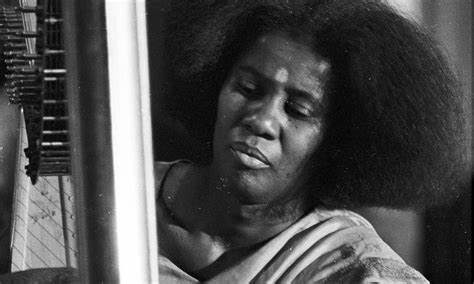
On this texture the voice of Sanders and the flute of Shepp are added at about minute 6, creating a fascinating melody, then finally we are introduced to Sanders first solo on soprano, something that is reminiscent of one of his first records as a soloist like Thembi – similar is the emotional temperature of the piece – until the drums depict a small figure that leaves the sound of the soprano free to paint smaller and gentler melodies.

An arco bass line enters and start a small talk with the soprano, then is the turn of small percussions to take the foreground. Gently we’re arrived almost at the end of the piece, and the waves of the harp and of the saxophone lead us to a spiritual quiet. It’s time for Shiva-Loka, another composition from Alice Coltrane, where the saxophone lines by Sanders and Shepp are decisely more preeminent and articulated even if the mood is still meditative and introspective while the two drums supply a small circular pulse, both more careful about nuances than about pushing.

Disc two opens with John Coltrane’s Africa, a composition I really believe each one of you remembers since present also in last year release of the album Evenings at the Village Gate featuring Eric Dolphy. The melody played by Shepp is obviously the same as John’s original, as faithful is the structure of the composition, but Alice Coltrane goes far beyond McCoy Tyner’s voicings orchestrations on her piano, leaving space to open dissonance and to a music that is more reminiscent of Coltrane mid-60s sound with two drums and horns than of the swinging perfection of his historical quartet of the first part of that decade.

Fire music, as not only for the presence of Shepp, but also for the strenght of the collective effort to be faithful to the original John Coltrane pursuance of unknown lands of expression, with Sanders boiling up until the turmoils that were typical of his collaboration with his late colleague, the music reach another great point where the horns shut up leaving first the piano, then the drums accompanied by the flutes, then again the two basses, free to give life to a sonic landscape made of trembling notes and of a contemplative, final climax at the same time.

Leo, original conceived as a duet between John Coltrane tenor saxophone and Rashied Ali drums, is another piece whose different versions vary as far as the number of musicians involved and consequently as far as arrangement. I have read reviews of this concert in which the reviewers state that this Alice Coltrane is even more in command than in albums like the 1966 live recordings of John Coltrane At The Village Vanguard Again! and Live In Japan, both released by Impulse!, but if a certain progression in mastering her art is surely possible, a comparison between those performances is almost useless.

First of all because the renditions of John Coltrane compositions live were mostly comprised not only by technique and will to experiment but also by the mood of that particular night. As an example, trying to compare the versions of Leo taken from Live in Japan or Interstellar Space and this rendition is impossible, since the differences in personnel and feeling or frame of mind.

One can but notice an increase in the substance of the music itself, such as in reaching a culmination where Leo stands at the opposite of Journey in Satchidananda. The two tenors, the instrument for which John Coltrane is mostly known, are finally free to invoke the true spirit of this music as initially intended by his creator, while at the same time her wife Alice Coltrane is free to run across her keybord as she was doing during the live recording of The Olatunji Concert: The Last Live Recording.

According to the Universal website, this release is only the first step in an initiative held in order to celebrate Alice and John Music through all this year 2024. If this means there will be new music in the near future, we will be only happy to hear such new stuff, hoping, as it happened, that the quality of the recorded sound will improve and increase from the first 2000s releases of live albums until the present times. And we also hope this music will be a good starting point for an younger generation of musicians as an inspiration source.


Friday, March 1, 2024

Ornette Coleman Birthday Broadcast on WKCR

On March 9, 2024, the date of birth of Ornette Coleman, WKCR will broadcast all day for 24 hours (12.00 A.M. – 11.59 P.M.) the incredible music of the alto saxophonist, violinist, trumpeter, composer and music theorist. Born in Forth Worth, Texas, in 1930, Ornette Coleman revolutionized jazz starting from a cubist vision of bebop up to harmolodics, his innovative music theory in which sounds are no more linked to a tonal centre but free to develop themselves and progress according to the taste, culture and sensitivity of the musicians.

Since the very beginning of his career, despite the singability of the compositions included into his first album Something Else!!!! (Contemporary, 1958), Coleman performances were perceived as shocking by the jazz community, provoking event violent reactions of rejection in other musicians. Drummer Max Roach as an example stated that Ornette Coleman was ruining jazz, even if he played, later on, with musicians associated with the free jazz revolution such as Cecil Taylor.  

But Coleman, who played for his entire career a plastic alto saxophone because of its microtones even if it was more difficult to play than one made of brass, and his collaborators Don Cherry, Scott La Faro, Charlie Haden, Ed Blackwell and Billy Higgins, were convinced about the righteousness of their music vision, and decided to go on. It was with Free Jazz: A Collective Improvisation (Atlantic, 1961) that the shock widened thanks to the use of a double quartet, one led by Coleman and the other by Eric Dolphy.

Coleman career and discography are full of such moments of redefinition of a musical genre such as jazz. From the percussions of the Master Musicians of Jajouka in Dancing in Your Head (Horizon, 1977), to the orchestrations of Skies of America (Columbia, 1972) featuring a long composition played by the London Symphony Orchestra, from Song X (Geffen, 1096) realized with the help of Pat Metheny to the experimentations on behalf of Yoko Ono, Lou Reed and The Grateful Dead, the music of Ornette Coleman is under the sign of experimentation and adventure.

Those willing to celebrate, next Saturday, the anniversary of Coleman birthday, would certainly connect to WKCR in order to enjoy a full day of incredible music. 


Friday, March 24, 2023

Don Cherry: the eternal theatre of fantasy and the sound of surprise

“[...] Being connected with children as I have in my life, I feel that it’s important to keep this alive, this fantasy. [...]What is reality? What is fantasy?” Don Cherry, March 12, 1970

Born in Oklahoma City (Oklahoma) in 1936, Don Cherry is well known as the trumpet player of Ornette Coleman during his successful attempts to revolutionize jazz music. Mind, my readers: we won’t discuss here the principles of harmolodics, thing we hope we’ll face in the future, even if we’ll talk diffusely about the records our two heroes gave life together. For the moment it is important to stress that, if Coleman played a plastic saxophone in order to utilize the microtones – do you remember what we were discussing some months ago when talking about soprano saxophones and straight horns? – to create a freer music in comparison to bebop and the previous jazz music, Cherry used a pocket trumpet, an instrument with a nasal and a less chrystalline sound than an usual trumpet.

One thing that always hit me when I think about Coleman and Cherry’s instrumental choices, and an example I want to use to explain myself better, is that of those photographers who, in the digital i.e. in an extremely precise era, go back to Polaroids and toy cameras. Leaving some processes to the accident, to a form of creative chaos – as the saturation of colors, the impossibility to control contrast through different films and papers or, in the case of music, the difficulty in controlling instruments that are not thought to be heavily precise – is a good way to play a music in which there is no wrong note in a given process since it depends from what will follow.

So, what Coleman and Cherry were trying to obtain was an extreme freedom starting from extreme constrictions. If Something Else!!!, the first album by Ornette Coleman (Contemporary, 1958) shocked the audience of that time for its extreme freedom, it is true that it is an album full of beautiful, recognizable and memorable melodies. Mind about Jayne, third track of the album: trumpet and alto go at a nice unison before soloing, with Coleman producing himself in his typical ‘laughters’ before playing a melody with an undefined and mocking tonal center.

Things change a little with the following album Tomorrow is The Question! (Contemporary, 1959) where piano is excluded from the palette, which increases in tonal and harmonic freedom. Coleman is taking bebop revolution to its extreme. If Charlie Parker and his peers were playing with dissonances resolution trying to give life to a more and more complex game, defying the listener and the other musicians involved, the music of Ornette Coleman instead is prone to give into new directions.

Once John Coltrane, a Parker’s enthousiast during his younger age and a contemporary of Coleman,  told an interviewer that he was, during his ‘sheets of sound period’, trying to express one sentence going in two different directions at once; Coleman himself wanted to reach with his music every possible direction. What we have here is a conscious attempt to go beyond the limits of an intellectual experience as bebop became in the end, trying to open new paths to the musicians who wanted to follow this new road even if at risk of not being understood.

There’s in fact a huge tradition of musicians who not only did not dig Ornette Coleman’s idea and practice of music, but also a great quantity of musicians who imagined the jazz Coleman and Cherry were creating was only a sum of incoherent, unrepeteable melodic lines in which dissonance had the effect of destroying the musicians ability to change chords and play with different intonations. Coleman music was taken by many – by Charles Mingus as an example: take for instance his interviews contained into the book Mingus Speaks by John F. Goodman where the bassist and composer talks diffusely about the music of Albert Ayler and others – as an attack to the seriousness and complexity of music itself.

If we try to observe better how things happened, we will notice, instead, that a huge amount of musicians from the end of the 1950s until the end of the following decade dedicated their energies to sort out of the shallows of a more and more intellectual drift in order to obtain always more freedom of expression. Albery Ayler with his ‘speaking in tongues’ melodies, Coltrane with his ‘sheets of sound’ and then with his collaboration with Pharoah Sanders in order to obtain the unpredictability of a music driven by two different musicians instead of one, Archie Shepp with his rawness and fierceness, and so on.

Ornette Coleman and Don Cherry gave life to a music that conveyed different emotions, as one can feel listening to his most known composition, Lonely Woman, that opens his third album The Shape of Jazz To Come (Atlantic, 1959) where a simple and again memorable melody is played through a rough and raucous style in order to create some anguish, as in the famous picture The Scream by Edvard Munch. A nightmarish urban solitude is what we can approach through Coleman way of playing. Don Cherry, on the other hand, with his graspy and anti-crystalline sound is the perfect, crackling partner for the altoist and composer.

And even if tracks like Peace and Focus on Sanity are less anguishing, the unpredictability of where the horns will go was leaving the linstener of that time with a potent sense of disorientation. Things are going even worse – but we prefer to say: even deeper – with Free Jazz (Atlantic, 1961), an album where two quartets, one led by Coleman and the other led by his friend and pivotal figure of that time Eric Dolphy, are intersecting each other in a disorientating stream of consciousness of about 37 minutes.

Notably, the previous album This is Our Music (Atlantic, 1960) features a Coleman composition titled Beauty is a Rare Thing that in a way anticipates the trumpeter’s future enterprises as you can hear through Mu, a collection of two LPs issued by Actuel in 1969. But let’s keep on following the tracks in the right order. Obviously Ornette Coleman’s music not only encountered solid oppositions, but also arose curiosity at a point in which another contrasted innovator, the above nominated John Coltrane, in 1961 wanted to record an entire album of Coleman compositions alongside with his partners Don Cherry on pocket trumpet, Percy Heath and Charlie Haden on bass, and Ed Blackwell on drums.

Listening to the album The Avant Garde released by Atlantic is a strange experience. One can hear Coltrane trying to fit Coleman melodies with his peculiar style, not following harmolodic rules – harmolodics is the name of the music theory Coleman gave shape through his playing and thinking – but his own path. In a way this is comprehensible since no jazz musician can play as someone else and everybody has to stay as close as possible to his or her world of reference, but in another way this album seem to me as a wasted opportunity since there is not a real encounter between Coleman and Coltrane worlds, only a juxtaposition of compositions and styles into one album.

Anyway, soon Don Cherry started figuring out how his own music would sound, and soon he signed a contract with Blue Note producing his own trilogy in which one can hear how playing with two giants saxophonists helped him developing his own conception of art. Cherry’s trilogy embodying Complete Communion (Blue Note, 1965), Symphony for Improvisers (1966) and Where is Brooklyn? (1967) is one of the most accomplished statements in the realm of improvised music.

The concept is similar for each of the three records: there is a theme introducing a ‘tutti’, a unison, and then there is place for every soloist in order to express himself. If Complete Communion, featuring Gato Barbieri on tenor, Henry Grimes (from Albert Ayler combos) on bass and Ed Blackwell on drums, divided into two different parts, one for each LP side, it’s the most airy and catchy, relatively speaking, while the ending of the trilogy is left to the most newyorican, groovy and nervous Where is Brooklin?, where Cherry is supported by Pharoah Sanders, increasing his debt with Trane idea of sound and music.

Symphony for Improvisers, the album that stays in the middle of the trilogy, is possibly the most complex. The line up is comprised of Cherry on pocket trumpet, Pharoah Sanders and Gato Barbieri, Henry Grimes, Karl Berger on piano and vibraphone – possibly after the removal of these melodic instruments from the Coleman groups Cherry would love to know how they could be reintegrated into the music without loosing that peculiar stream of consciousness his pal gave life to – and the resulting music is aggressive, intimate and fluent at the same time.

Another couple of collaborations we have to mention are Charlie Haden project of the Liberation Music Orchestra (Impulse!, 1969), where Cherry is present with both his pocket trumpet and a flute, giving life to a melange between the songs the Hispanic anarchists were singing between their courageous battles against the army of Francisco Franco and more free jazz oriented parts, and the previous album recorded by the New York Contemporary Five with Archie Shepp (Sonet, 1964), where Cherry, Shepp on tenor, altoist John Tchicai, bassist Don Moore and drummer J.C. Moses give life to a music devoted to Coleman’s and Monk’s heritage.

But Cherry is the kind of person who don’t sleep on other people’s music theories, and by 1968-69 he starts exploring new territories in music, thanks also to a fruitful collaboration with Terry Riley, giving life to a previously unheard mix of improvised, ethnic music, art rock and psychedelia (not all the subgenres are always present together in the same project, but they convey into Cherry’s music as far as their essence, leaving every album and every project free to develop where the particular moment and musicians involved can make the sound fluorish).

More theatrical than his previous music, as one can see through different live performances recorded live and reproducible online, Don Cherry’s new path will be harshly absorbed by jazz intellighentzja, but important tracks will be visible in artists like Sergeij Kuryiokhin, a musician we talked diffusely last year. Mu – First Part and Mu – Second Part (BYG, 1969 and 1970) are possibly Cherry masterpieces, together with Symphony for Improvisers. Featuring the trumpeter accompanied only by Ed Blackwell on drums in a series of beautiful duets where Don Cherry plays time after time his pocket trumpet, a bamboo flute, piano, his own voice and a series of small percussions, this couple of records helped the musician in finding his own most personal voice.

Not ascribable exclusively to the realm of improvised music nor to that of exotic or world music but living a life of its own somewhere in the middle, this music is the higher point in Cherry’s career, not easily replicable as the less accomplished El Corazon (ECM, 1982) will show and an inspirational source for musicians to come, as the double CD Piercing The Veil (AUM Fidelity, 2007) by Cherry’s enthousiasts bassist William Parker and drummer Hamid Drake will show you.

Don Cherry’s releases at this point in his career become discontinuous and sometimes repetitive even if in a way fascinating. Orient and Blue Lake (both BYG, 1971) are attempts to broaden the landscape adding tampoura – played by his wife Moqi Cherry – and other instruments to the palette of the two Mu, but partly for the repetition of some formulas partly because of a lesser compelling inspiration the result is discontinuous.

A fascinating result is, instead, Brown Rice (Horizon, 1975) where Cherry, at his own pocket trumpet and also at Yamaha keyboards is accompanied by Frank Lowe on tenor saxophone, Charlie Haden on bass, Billy Higgins on drums and Ricky Cherry at acoustic and electric piano, giving live to a music similar to the so called krautrock explored in the same years by Can – raised by Irmin Schmidt, a student of Karlheinz Stockhausen, where psychedelia and trance are scratched by Lowe’s statements and sweetened by Don’s caressing but at the same time determined voice.

During his last years, Cherry’s music was issued by Manfred Eicher’s ECM, a label famous for his peculiar sound design: Cherry encountered old friends like Charlie Haden and new accolites like percussionist Nana Vasconcelos, producing a less adventuros but better recorded music coherently in line with his Theatre of Eternal Music idea. Passed away on October 19, 1995, Cherry’s music is one of the most intriguing and personal statements of one of the most creative of XX Century.