Showing posts with label Muhal Richard Abrams. Show all posts

Sunday, August 7, 2022

Two Pianos, a Harpsichord and a Few Magical Instruments More

One of my favourite activities since when I was young is to go through book and record shops, looking for some hidden gems. You can find records at half price sometimes, or used items, that have nothing to envy to the last releases. Since the one we’re living is a particular time, more devoted to reissues than to new material – with some notable exceptions – I’d love to spend some time talking about some interesting stuff I ran into a couple of weeks ago.

In this small record shop I found out, in effect, for half their price these three CDS of free jazz and contemporary music. Two are double albums. As I discovered at home, listening to them, they were worth the price and the time I spent listening to them. The first album is a piano trio by an old acquaintance of this blog: pianist Matthew Shipp, in a collaboration with long time collaborator bassist Michael Bisio and drummer Norman Taylor Baker. The CD is titled Piano Song and it was released by Shipp’s label Thirsty Ear in 2017. It is the most recent release of the three I’ll write about in this post.

A little disappointed by one of the last outputs by Shipp in a quartet comprising Paul Dunmall, Gereald Cleaver and Joe Morris (here is the review) because of its predictability, I find this other trio album, instead, exquisite, intense, fresh and innovative. Matthew Shipp is, above all, a spiritual musician. The world became aware of him thanks to his work with the great saxophonist David S. Ware, devoted to free jazz and to Ganesh, and thanks to his big open chords and great melodic approach to piano, along with bassist William Parker and many drummers – the one I loved the most was Susie Ibarra – he renowned the great tradition of energy playing, in line with the historical quartet of John Coltrane for the Impulse! label.

The 12 original compositions in this album are great examples of how varied a refinished composer can be musically. There are pieces whispered like a caress full of compassion and others that feature an assertive execution. The two partners are interacting with Shipp not only in order to provide the right accompaniment, but in some compositions, reminiscent of the use of electronics and space in other Shipp’s outputs via his label, they gain the foreground with sonic gestures that leave the imagination free to be hit. The above mentioned use of space as a compositional tool makes me think of Shipp as a contemporary composer, accustomed to modern music – as he told me in an old interview in which he cited Varèse and Baroque music along with Jazz as a first influence to him.

That’s why the second, double album in this multiple review article is so important. It is an album by another great pianist – one of the greatest in jazz history to tell you the truth: ‘Muhal’ Richard Abrams, founder of the Association for the Advancement of the Creative Musicians I mentioned in a series of articles about the Art Ensemble of Chicago few years ago. Abrams is a versatile musician: his many records spans through Contemporary Music and Jazz, and if Sightsong, a beautiful album duo with bassist Malachi Favors from the AEoC was a melodic and melancholic output, this other release, titled Sound Dance and issued by PI Recordings in 2011 is dominated by an impressionistic, pointillistic and vibrating style.

The first disc of the set is a duo with saxophonist Fred Anderson, the second features instead George E. Lewis at both trombone and electronics. If during the concert with Anderson it is more clear who is leading and who is accompanying, the second set is the most intriguing for how both the trombone and the electronics are mixing with the piano notes. The drive becomes less evident, almost hidden, and this sensation of uncertainty comes to the listener without a decisive solution, even if the music is capturing the attention with his beauty and peculiarities. After all what we’re listening to is a dialogue, and, as it happens when you speak to another person, sometimes your words are driven more by the person you’re interacting to than by your ideas and concepts. Call it interaction, or relationship: but it’s the same with music and it’s interesting to hear such a thing happening during a performance.

The most intriguing part of the third album is the second disk, because it features compositions for harpsichord, a far away relative of the piano, and an instrument used mostly in Baroque music but not that much appreciated by Contemporary composers. Xenakis here, as it happens with him, leads the instrument at his limits, and uses the harpsichord mostly as a percussive instrument. It becomes interesting to listen to the composition Komboi, 18 minutes of harpsichord and percussions, because the feeling of an exchange, with the percussive harpsichord and the melodic percussions is something familiar to the listeners of avant garde jazz: you’ll remember for sure that duets between Cecil Taylor and Max Roach.

The first disk, instead, features three compositions for large ensemble – one, Jalons, directed by Pierre Boulez driving his Ensemble Intercontemporain, plus Keren, for trombone, and Nomos Alpha for cello. These are all compositions by the late Xenakis, who let apart his stochastic approach to music – you can read my monography about the composer in this blog – but who was always curious about pushing the boundaries of the instruments: so in the compositions for ensemble, as an example, you’ll not find the usual glissandi but notes mostly on the higher pitches.

I’ve written three reviews of old music – the two Xenakis CDs were released by Warner Classics in 2007 – because I wanted to recap a little the meaning and the practice of a music that nowadays is losing part of its how-to. As I wrote in the last multiple review, when I look around myself I mostly feel the struggling and the difficulties of a niche to be issued and to be heard by a larger audience, and the difficulties from the younger musicians to build a vision from an inner to an outer world. But since the world of rock and other contaminations has mostly completely gone, improvised music and the avant garde is still the most important tool to critique our society and imagine something better.

From September, other releases are waiting for us: from the new edition of Coltrane’s Blue Train with a disk of never heard before material, to a couple of new releases by the Japanese enfant terrible Keiji Haino, one with SUMAC. I hope to hear all of this stuff and more, but for the moment I wanna go back to the records I bought during these last years and share with you some hidden gems that maybe you have lost through the years. After all, music is a matter of love, and not a matter of being fashionable. 


Monday, July 25, 2011

The Art Ensemble of Chicago (part 1)

An Introduction
Words: Gian Paolo Galasi


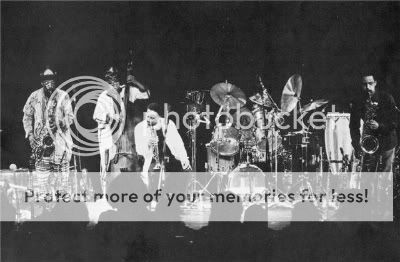
The Art Ensemble of Chicago in Nervi 1979

The Art Ensemble of Chicago is one of the most revered groups of improvised music, even outside of the jazz community. At the beginning of the new Century, Motorpsycho and Jaga Jazzist Horns gave shape on their split album "In the Fishtank" (Konkurrent, 2003) to their rendition of the 'Thème de Yoyo'. In those same years, to pick up a reissue of ESP-Disks featuring Sun Ra and Albert Ayler, or BYG-Actuel records dedicated to Milford Graves and Alan Silva, or even to be astonished by one of the last Coltrane live performances newly put on Impulse! was finally possible for a wider and younger public.

People could immerse way ahead back in the history of jazz, and that was a refreshing and exciting experience, for all those educated by the likes of Slint, Tortoise, Gastr Del Sol or Godspeed You Black Emperor! to be curious about past and present forms of music more focused on expanding structures and dealing with sound, more that previous post-modern indie-rock or grunge-existentialist generation.

Adventurous listeners (and musicians, at least the younger ones, those more interested in developing something more personal on their own) were also putting their ears on heavy psychedelia rooted in kraut-rock (Can, Neu!, Popol Vuh), in that part of English progressive music formerly known as 'Canterbury rock' (Soft Machine, Henry Cow, that were collaborating with the South-African The Blue Notes / Brotherhood of Breath),  and contemporary music (John Cage, Karlheinz Stockhausen) so to have a more complete picture of the past century perspectives on music.

The internet was also full of resources for those who wanted to go deeper with that music than The Wire or other reviews on both sides of the Atlantic were doing on paper: Matthew Goodheart notes on Cecil Taylor music, wide portions of socialist Frank Kofsky's writings on the 60's ideals surrounding and infusing both John Coltrane and Malcolm X; Perfect Sound and Bagatellen's essays and interviews, and, more obviously, lots of files to download, listen to and share, waiting for a physical reissue to put on shelves.

In the meantime, Mr. Anthony Braxton was coospirating with sonic terrorists Wolf Eyes from Victoriaville's stage, while sampled by white hip hop minstrel Buck 65 along with Richard Teitelbaum, while David Sylvian was engaging Evan Parker and Derek Bailey for his "Manafon" and "Blemish" records. I didn't have an older brother happy to live again the golden age of Pop Group, Barry Adamson's Magazine and The Slits collaborating with Neneh Cherry - but what about the Manchester-born bassist recruiting Matana Roberts, that a month ago issued a record for the Constellation label? -, but it doesn't matter.

Coming back on topic, for thirty-something listeners The Art Ensemble of Chicago was the more affordable experience to start with, along with the Sun Ra Arkestra. Because of the constant presence of two major works like the couple of Atlantic outputs, in which the use of percussions, their relative 'straightness' and fluidity can be considered a good hint in understanding and appreciating their theatrical attitude. It is impossible to introduce the Art Ensemble of Chicago (from now on AEC) without talking about the Association for the Advancement of Creative Musicians (AACM).

In order to introduce the AACM, those words by Anthony Braxton can be considered an excellent syinthetic statement:

"The AACM musicians [...] not only they demonstrated a solo music, they've demonstrated ensemble music, orchestral music, music in the conventional systems, music in their own systems and their own relationship to time and rhythm; [...] People talk about the AACM as if it represented one set of values or one area of research, but it was a dynamic spectrum: no one was interested in establishing a single collective voice. It was a restructuralist school, a union of restructuralist thinkers".

Apartment Building in Chicago's "Black Belt"


"The history of African Americans in Chicago dates back to Jean Baptiste Point du Sable’s trading activities in the 1780s.[1] Fugitive slaves and freedmen established the city’s first black community in the 1840s. By the late 19th c., the first black had been elected to office.

The Great Migrations from 1910 to 1960 brought hundreds of thousands of blacks from the South to Chicago, where they became an urban population. They created churches, community organizations, important businesses, and great music and literature. African Americans of all classes built community on the South Side of Chicago for decades before the Civil Rights Movement. Their goal was to build a community where blacks could pursue life with the same rights as whites." (from Wikipedia)

The 'Black Belt', which was the city's ghetto (even if socially well notched) was inhabited by almost all Chicago's black population - over one million of people -, struggled by being overcrowded, by unemployment and by the lowering of education and life standards since 1918, when the Migrations were increasing the amount of black people living in his boundaries.

In 1961 Sun Ra and his Arkestra, that was also an idea of community and living together, definitely left Chicago for New York. The same year, pianist Richard Abrams (then named 'Muhal', which means 'first') put together with Donald Rafael Garret the Experimental Band. Abrams was at the time the most wanted pianist by the great soloists coming to the city to play gigs, including Miles Davis and Dexter Gordon. Garret was clarinetist and bassist, played with Sun Ra and Rashaan Roland Kirk, and is present on John Coltrane's "Live in Seattle". Both musicians were at the core of a group of players that developed jazz in a different direction than the 'new thing' generation. Trumpeter Lester Bowie

“It was just the guys brought in music, and we just played it. I mean, it was like just a normal rehearsal, like any other band, except the music was a bit different. But we just all came and met, and they passed out the charts, and then we would run through . . . Let's say in a particular evening there were five or six charts we would run through, from Braxton or from Muhal or whoever. (...) I mean, it was interesting music. Muhal is one of the great composers and arrangers. It was really exciting. And the thing that's really so nice about the AACM -- you had all these individuals.

I mean, you had Threadgill's music, you had Braxton's music, Roscoe's, Joseph's. I mean, it was just unbelievable, the difference in the approaches. So they were all really very fresh. We weren't really everyone coming out of the same thing (...) we had done quite a few concerts together anyway, before he [Jarman, ndA] formally joined the group. We had been working together. As a matter of fact, we had done big things with his group and our group. We used to have some quite interesting programs in the AACM. You wouldn't believe some of the combinations of individuals and instruments that we had. (...) We'd have Joseph in Roscoe's band and in Braxton's band, and just so much excitement, so different."

AACM circa 1968

So Lester Bowie, reedists Roscoe Mitchell, Anthony Braxton, Kalaparusha Maurice McIntyre bassist Malachi Favors, trumpeter Phil Coran (after he left Sun Ra), drummer Steve McCall and pianist Jodie Christian. Almost at the same moment, in St. Louis, the Black Artist Group (Julius Hemphill, Oliver Lake, David Murray) start to develop their own music and soon came in contact with the Chicagoans. About the music they were playing, Lester Bowie said:

"I remember the first festival we did. We hooked up with the guys from St. Louis who formed an organization similar to the AACM, from our example -- they started a group called B.A.G, Black Artists' Group, in St. Louis. There was another group in Detroit. So we started having exchange concerts and having our own mini-festivals. 

I remember the first time that the St. Louis guys came up, and the Chicago guys were kind of chesty, "Hey, we got this down" -- we were kind of chesty. Hey, Lake and LeFlore and Scrooge, they came up, and they was like walking all over us. Hemphill . . . They were walking all over the AACM cats! It was so exciting, just the music . . . To hear so many people within this so-called . . . That's why Malachi says "so-called free." People, when they think of free music, they just have one thing in their mind, [sings incoherent line], and that's all that happens. But there's so much more expression and emotional depth in that sort of music. And when they came up, it just kind of shocked everyone just to realize just how great musicians are wherever they happen to be from. They don't have to be from New York or Chicago, or you don't have to have ever heard of them -- and they are just outstanding”

From the Experimental Band sorted out Phil Corhan's Ethnic Eritage Ensemble and Roscoe Mitchell Art Ensemble, on which from now on we will focus since the next article.

As Joseph Jarman:  

“Well, remember that we were all members of the Association for the Advancement of Creative Musicians. So we had developed a kind of bond that was spiritual as well as political as well as financial, and through the auspices and the philosophy of the AACM, we were able to manifest this Art Ensemble group, to share and do everything together, and that was very unusual for a group to do. Until Muhal Richard Abrams and Phil Cohran founded the AACM, we had never had that experience, except when were in Muhal's Experimental Band, which was a band that didn't perform publicly. We just went into this place to rehearse, take our music and that'd be it. After two or three years, we had to perform 'cause the place that was allowing us to rehearse needed to know we were actually doing something there! (laughs) That was the Abraham Lincoln Center on Chicago's South Side. It was after that the AACM was founded, and it was based upon that experience that we were able to generate what became known as the Art Ensemble".


Related Bibliography

Chicago Commission on Race Relations. The Negro in Chicago: A Study of Race Relations and a Race Riot. 1922.
Drake, St. Clair, and Horace R. Cayton. Black Metropolis: A Study of Negro Life in a Northern City. Rev. ed. 1993.
Philpott, Thomas Lee. The Slum and the Ghetto: Neighborhood Deterioration and Middle-Class Reform, Chicago, 1880–1930. 1978.

Lewis, George. A Power Stronger Than Itself: The AACM and American Experimental Music. University of Chicago Press, 2008.
Shipton, Alyn. A New History of Jazz. London: Continuum, 2001.
Jost, Ekkehard. Free Jazz. Da Capo Press, 1994
Lock, Graham. Forces In Motion. The Music and Thoughts of Anthony Braxton. New York: Da Capo Press, 1988
Litweiler, John. The Freedom Principle: Jazz After 1958. Poole, Doorset: Blandford Press, 1985
Wilmer, Valerie. As Serious as Your Life: John Coltrane and Beyond, London: Serpent's Tail, 1977

Tuesday, February 15, 2011

Anthony Braxton - 3 Compositions of New Jazz (Delmark, 1968)

Stunning Braxton's debut record as a leader is one of the milestones in defining and developing avant-garde AACM language and aesthetics, like its predecessor, 'Muhal' Richard Abrams' Levels and Degrees of Light, and second Braxton double For Alto. Along with Roscoe Mitchell's Sound, these albums signed an era with their intense expanding improvisation's palette and exploring new compositional territories, related to textures of sound and individual expression.

Multi-instrumentalism, the use of symbolic notation systems so to give improvisation and composition equal stress and new shapes, the relevance given to sound itself and its modulation along with silence, little instruments (bells, whistles, bottles), these seminal performances will influence improvised music for more than 30 years, and their inputs will give shape to a wider range of electroacoustic styles that will go beyond jazz. After all, Braxton's music is wide aware of avant-garde proper language: his interest in Cage's and Stockhausen's music will be developed in his parterships with the likes of Alvin Curran, Richard Teitelbaum and Wolf Eyes. Leroy Jenkins and Leo Smith have developed, spannig their careers, the intuitions this record witnesses, related to a new way of exploring their musical heritage (blues, r'n'b, gospel, above all). Muhal Richard Abrams is perfectly at ease with his debussian / impressionistic style, here at his rough and pointillistic, both energic and abstract peak. 

Personnel: Anthony Braxton (alto & soprano saxophones, clarinet, flute, musette, accordian, bells, snare drum, mixer); Leroy Jenkins (violin, viola, harmonica, bass drum, recorder, cymbals, slide whistle); Leo Smith (trumpet mellophone, xylophone, bottles, kazoo); Muhal Richard Abrams (piano, cello, alto clarinet).

Tracks: 1. (840m) -Realize-44M-44M, 2. N-M488-44M-Z, 3. The Bell